2026-08-16 SUNSHINE Engineering Team
Airbeam Tent vs Pole Tent: What Makes the Difference

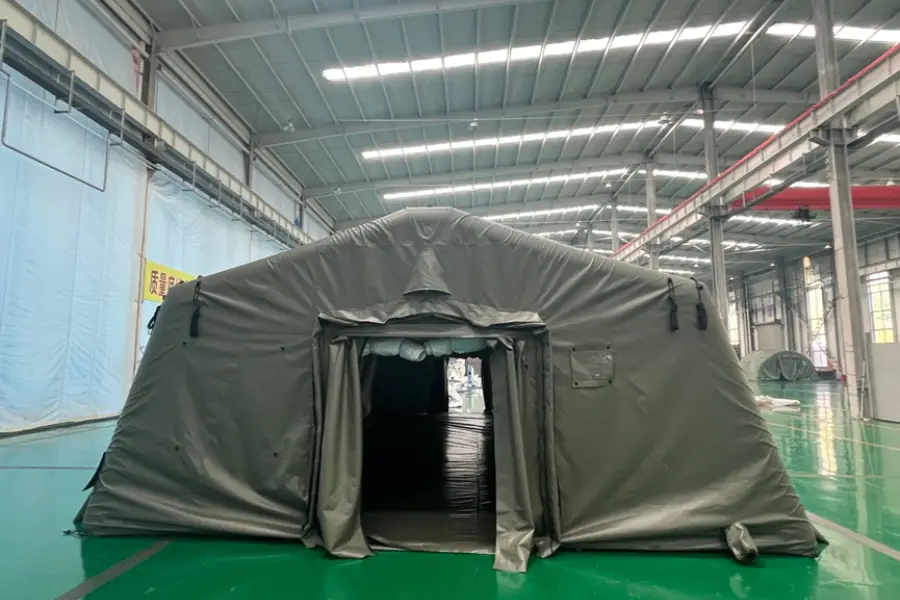
An airbeam tent replaces the segmented pole frame of a conventional tent with one or more inflated air tubes. That single structural change affects how you pitch the shelter, how it behaves in wind, how much space it occupies in your vehicle, and what you can do if a beam loses pressure. Understanding those differences helps you decide whether an airbeam tent matches your use case.
How the Airbeam Frame Works
A conventional pole tent relies on aluminum or fiberglass segments that lock together through sleeve loops or external clips. An airbeam tent uses fabric-wrapped tubes that you inflate through a valve, usually with a manual or electric pump. The pressurized tube becomes the rigid skeleton of the shelter, holding the fabric in place without external poles. The result is a cleaner interior profile with no pole segments crossing the living space, and a setup process that does not require sorting pole bundles by length.
Most consumer airbeam systems run between 5 and 8 psi. Manufacturers specify a target pressure on a label near the valve or in the setup guide. Some models include a pressure relief valve that opens at a preset threshold, reducing the risk of overinflation during manual pumping. The beam material itself varies: TPU (thermoplastic polyurethane) is more resistant to cold cracking and UV exposure than PVC, which tends to stiffen and degrade faster in field conditions. If you are comparing models, beam material is one of the specifications worth checking.
TPU and PVC also differ in how they age. A TPU beam stored inflated through a hot summer retains flexibility through the following winter. A PVC beam from the same production batch may develop surface cracks after similar exposure. This distinction matters most for shelters used year-round or stored in unconditioned spaces.

Working Pressure and Daily Inflation Discipline
Consumer airbeam poles run between 5 and 8 psi, about 34 to 55 kPa, and their setup guides treat pressure as a one-time step. Relief-grade beams work at a different point on the scale: the disaster relief emergency tent holds a working band of 18 to 22 kPa, and its Beaufort 8 wind rating, roughly 17 to 21 m/s, is conditional on the beams staying inside that band. Teams that run shelters as organizational assets treat pressure as a scheduled reading rather than an install-day event.
The published specification includes a re-inflation interval of 7 days or more, and that number turns pressure checks into a routine. Read the beams on the same gauge at the same time each day and log the values. A beam drifting toward the bottom of its band inside the interval has a slow leak to find while it is still a patch job, and the valve, seam, and fitting checks that locate it parallel the routines in inflatable rescue boat maintenance. A unit that needs topping up well before day seven is reporting a defect, and the response belongs in written procedure.
Pressure discipline is also where camping practice and organizational practice separate. A soft beam at a campsite can wait until morning; a shelter anchoring a medical post after the storm events cataloged in the EM-DAT international disaster database has no such margin, and programs structured along NFPA 1670 already treat equipment readiness as a documented routine. The wind behavior that depends on correct pressure is covered from the field side in Inflatable Tent Wind Resistance: A Field Guide.
Wind Performance and Real-World Evidence
Several field reports indicate that airbeam tents behave differently from pole tents in sustained wind. In a 2026 Reddit discussion about UK camping, users described a hurricane event on the Isle of Mull where most conventional tents collapsed while a large inflatable model remained standing. A separate account from the Tiree Music Festival noted that inflatable tents were the only structures left standing after an overnight storm. These are anecdotal observations, not controlled tests, but the pattern appears consistently across multiple independent events.
The structural reason is straightforward: an airbeam flexes as a continuous curve rather than breaking at a joint. Fiberglass poles can shatter into sharp segments, and steel poles can bend permanently if wind loads exceed their yield point. An underinflated airbeam may collapse, but reinflating it usually restores the structure without replacement parts. That flexibility does not make an airbeam tent indestructible, but it changes the failure mode from catastrophic breakage to a recoverable pressure loss.
A related factor is the shelter’s aerodynamic profile. The smooth curved surface of an inflated beam deflects wind more evenly than a pole frame with flat fabric panels and guy points. Pole tents concentrate stress at joints and clip attachment points; airbeam shelters distribute load along the entire length of each tube. That distribution reduces the chance of a single point failure cascading into a full collapse.
Field Repair Scenarios
Airbeam repairs fall into three categories: valve leaks, puncture patches, and beam section replacement. A valve that will not hold pressure can sometimes be tightened by hand or replaced with an aftermarket valve head. Small punctures in the outer fabric or the beam tube respond to the same puncture repair kits used for inflatable boats and SUPs. If a beam develops a split along its length, many models allow you to slide the damaged section out of its fabric sleeve and insert a replacement tube without disassembling the entire frame.
Military users have documented a related scenario: when one of multiple parallel beams fails, the shelter can often remain usable. In a 2024 Reddit post from a U.S. Army sustainment brigade, users described disabling a damaged inboard beam by closing its valve and relying on the remaining outboard beams to maintain structure. The tent pitched normally after staking out the slack. This redundancy exists because most large airbeam shelters use three or more parallel beams per span; losing one reduces stiffness but does not always collapse the frame.
The Army experience also highlights a maintenance issue that civilian users sometimes overlook: wet packing. The same Reddit thread described mold and mildew appearing inside beam fabric after a tent was packed damp during training. The officer responsible mandated wet packing as standard procedure, which meant the next unit to use the shelter found visible mold during unpacking. Simple Green or a 10 percent bleach solution cleaned the fabric without degrading the vinyl coating, according to a comment from a field service representative for one military tent manufacturer. The lesson carries over to civilian use: dry the shelter fully before storage, and avoid storing it in a damp basement or garage.

Packed Size and Setup Time
The trade-off most buyers notice first is packed bulk. An airbeam tent of comparable occupancy usually packs larger and heavier than a pole tent. A two-person inflatable model can occupy the space of a four-person pole tent in your vehicle. If storage space is limited, that difference matters.
Setup time usually favors the airbeam. Stake the corners, attach the pump, inflate the beams, and guy out the ropes. Experienced campers report single-person setup of a six-person airbeam tent in under ten minutes. A comparable pole tent often needs two people and twenty minutes to align all segments correctly. For frequent campers or teams that deploy shelters repeatedly, that time difference accumulates.
The pack size disadvantage also affects hiking and backpacking scenarios. If you are carrying a shelter to a backcountry site, the extra weight and volume of an airbeam system may outweigh its setup convenience. Car campers and emergency response teams, who drive to the site and may pitch under time pressure, tend to find the trade-off more favorable.
What to Check Before Buying
If you are evaluating an airbeam tent for the first time, several specifications deserve attention. Beam material tops the list: TPU handles temperature extremes better than PVC, and the price difference between the two materials is usually small enough that TPU is worth specifying. Pump inclusion comes next: some brands ship the pump separately, and an electric pump requires a power source that may not be available at the campsite. A 12-volt car pump works for vehicle-accessible sites but is useless for backcountry deployments.
Waterproofing rating matters in all seasons. Look for a hydrostatic head of 3000 mm or higher for year-round use. A lower rating may be adequate for summer camping in dry climates but will feel inadequate during sustained rain. Replacement parts availability is a longer-term consideration that most first-time buyers miss. Some manufacturers keep spare beams and valve heads in stock for ten years or more; others phase out older models quickly, leaving owners to source parts from third-party suppliers. Before committing to a brand, check whether replacement beams are listed in the current product catalog or available through the service network.
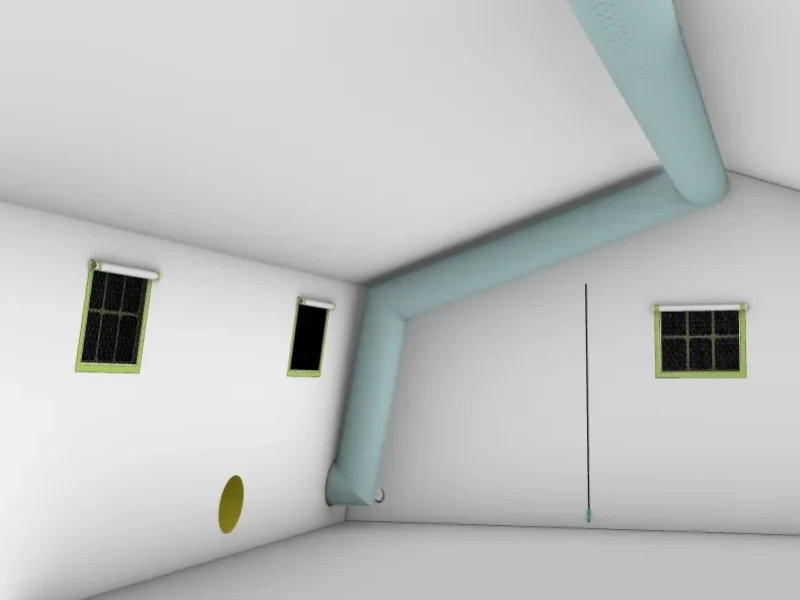
Interior ventilation rounds out the checklist. Sealed inflatable structures can develop condensation on the inner fabric if airflow is inadequate, especially in cold weather when the temperature difference between inside and outside is large. Look for adjustable high and low vents, and check whether the door panels open fully for cross-ventilation.
Caring for an Airbeam Tent Long Term
Two maintenance habits appear repeatedly in community discussions. Packing the tent wet leads to mold and mildew inside the beam fabric, often visible only months later during the next inflation. Military maintenance guides and camping forums both emphasize drying the shelter fully before storage. The second habit is rinsing the beams with fresh water after exposure to salt, sand, or chlorine. Simple Green or a diluted bleach solution is commonly recommended for vinyl-coated fabrics; abrasive cleaners can damage the beam coating.
If you store an airbeam tent fully inflated long-term, check the pressure monthly. Slow leaks are easier to locate and patch when the beam is pressurized and the fabric is taut. If you pack it partially deflated, debris can work its way into the valve opening and cause sealing issues later. The valve cap is the last line of defense against grit and moisture, so make a habit of securing it after every inflation.
UV exposure is a slower but cumulative concern. Prolonged direct sunlight weakens both the outer fabric and the beam coating over time. If the shelter sits at a fixed campsite for weeks, a reflective tarp or shade structure over the roof extends the fabric’s service life. The same care applies to storage: a dark, cool location slows UV-driven degradation during the off-season.
What Sizes and Formats Air Tents Come In
Air-supported shelters scale across the operational spectrum. Compact 2 to 4 person units work as command posts and reconnaissance shelters. Mid-size 6 to 12 person structures such as medical and healthcare support tents cover team billets and forward medical staging. Large inflatable hangar tents, sometimes past 100 square meters of covered floor, serve as casualty collection points or logistics hubs. Planners should match footprint to crew size plus equipment, and confirm that pump, repair kit, and anchoring stakes ship with the unit.
Three configurations recur in emergency programs: rapid deploy medical pods on single-beam air frames for triage in the first hours after landfall, surge capacity tent systems that expand an existing shelter footprint without rebuilding pole infrastructure, and inflatable hangar tents for vehicle maintenance and staging at forward bases. FEMA’s emergency shelter planning resources emphasize deployability and redundancy for incident support, and a crew that sizes its shelter mix around these roles can extend a base camp by a factor of two without adding pole-frame complexity.
FAQ
Do airbeam tents last as long as pole tents?
An airbeam tent’s lifespan depends more on beam material and storage habits than on inflation cycles. TPU beams can last through hundreds of pitch-and-pack cycles if stored dry and protected from prolonged UV exposure. The fabric body follows the same durability factors as a conventional tent: coating condition, seam tape integrity, and zipper maintenance. A well-cared-for airbeam shelter can serve for ten years or more; a pole tent in the same conditions has a similar expected lifespan.
Can you patch an airbeam in the field?
Yes. Small punctures in the beam tube or outer fabric can be patched with standard inflatable repair kits. If a beam splits along its length and the model uses a replaceable sleeve system, you can swap the tube without disassembling the entire shelter. If the beam is bonded rather than sleeved, field repair becomes more difficult and replacement may require ordering a new beam from the manufacturer. Carrying a basic repair kit with patches, glue, and a spare valve head covers most situations you are likely to encounter.
Do airbeam tents work in winter?
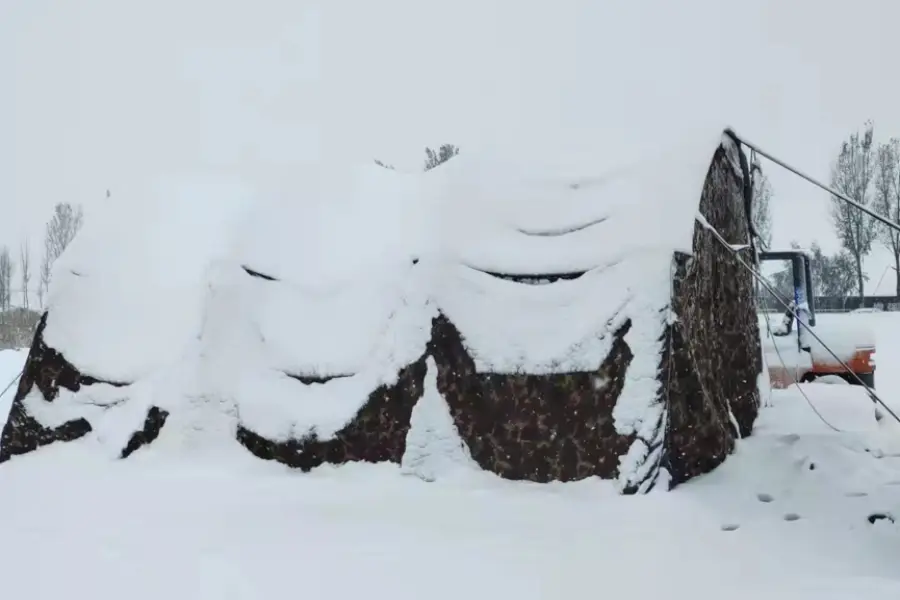
Cold temperatures make PVC beams stiffer and more prone to cracking. TPU maintains flexibility at lower temperatures. Snow load is another consideration: the same curved beam that distributes wind load well may concentrate snow weight differently from a pole frame. Check the manufacturer’s snow load rating and brush snow off the roof during accumulation rather than letting it build up overnight. Ventilation also matters in cold weather; without adequate airflow, moisture from respiration condenses on the inner fabric and freezes overnight.
Are airbeam tents heavier to carry?
Yes, for the same rated occupancy. The packed weight and volume are usually 20 to 40 percent higher than a pole tent of similar size. If you are backpacking to a site, that difference matters. If you are driving to a campsite or staging an emergency shelter, the extra weight is less significant than the setup speed. Some manufacturers address this with split-beam designs that pack into narrower bags, though the weight penalty remains.
Can one person set up an airbeam tent alone?
Most mid-size airbeam tents can be pitched by one person. Stake the corners, attach the pump, and inflate the beams sequentially. Some larger models benefit from a second person to hold guy ropes while the first person pumps, but the frame itself does not require two sets of hands to assemble. An 11-year-old camper documented a six-person inflatable tent setup in under ten minutes without assistance, according to a 2026 camping community discussion, which suggests that single-person operation is realistic for most consumer models.