2026-10-23 SUNSHINE Engineering Team
Insulated Tent Specs: Liners, Heat Loads and AC Cooling
An insulated tent earns its place in a tender through numbers: liner fabric and weight, the air gap it holds, and a declared path into the cooling plan. Under a 50 °C desert sun, a bare PVC cover turns a 54 m² relief shelter into an oven by mid-morning. A large insulated tent with a hung thermal liner keeps the same cabin workable on a smaller AC load.
This article sets out the liner, heat load and cooling specifications a procurement team should demand, using a 6 × 9 m aluminum frame rapid deployment shelter as the reference case. Its full structure is listed in the rapid deployment shelter specification overview.
What Insulation Actually Does in a Large Tent
A tent envelope is a membrane, so heat crosses it three ways at once: conduction through the fabric, radiation off a sun-heated cover, and air exchange at doors, seams and sleeves. The 700 g/m² double-sided PVC-coated polyester cover on the reference unit shrugs off rain and passes solar heat with little argument. Fabric on its own adds almost no resistance; the resistance comes from a still air layer, and trapping that layer is the whole job of tent insulation. This is why an insulated tent is engineered as a system, cover plus liner plus air gap, instead of a thicker skin.
Shelter agencies treat envelope behavior as a design task, and UNHCR guidance on sustainable shelter construction places climate protection beside structural safety in the same documents. For a buyer, that translates into one tender line: state the insulation system, its materials and its mounting, with the same discipline as the frame loads. Weather tightness stays a separate clause, graded for coated fabrics under test methods such as ISO 22958, so thermal and waterproof performance each carry their own evidence.
A large tent differs from a building in ways that flatter insulation. There is little thermal mass to lean on, doors swing all day in a busy camp, and a membrane cover radiates inward after dark as fast as it cools outside. An insulated shelter smooths both ends of that swing, which matters as much for medicines and electronics as for people. Deployment logistics, crew planning and packing are covered in our article on inflatable all-weather tent deployment planning; this page stays on the thermal side of the envelope.
Liner Systems: Materials and Mounting
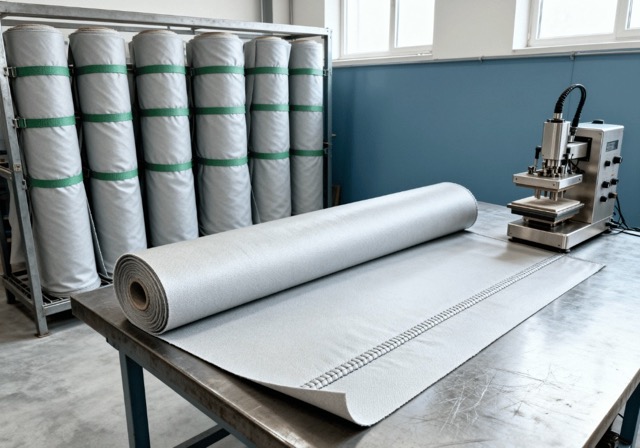
In this shelter class, insulation means a technical liner hung as an inner skin, and the reference unit’s optional insulating liner is a Silvertex-type nonwoven at 136 g/m². It carries component-level flame-retardant certificates such as CPAI-84 and M1, which is the honest wording for liner fire documents on an insulated tent. Its job is physical: hold air still, move the dew point away from the sleepers, and give the cabin a matte ceiling under the lights.
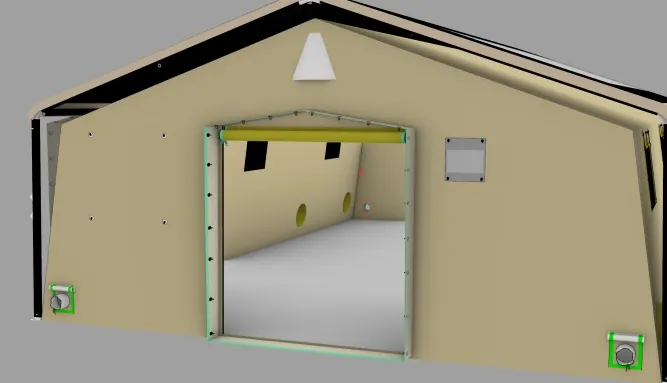
On an insulated tent, mounting decides how much of the theoretical benefit survives the site. A liner fixed point-by-point can sag away from the ridge and open cold gaps at the eaves, while a liner hung along a continuous ridge line stays taut and keeps the gap honest. The ridge pulley lift on the reference frame, built from anodized 6061-T6 / 6082-T6 aluminum, lets a small crew pull the liner across from inside, with no scaffolding and no crane day. When quotes arrive, ask where the liner attaches, what clearance it holds at ridge and eave, and how the fixings avoid hard thermal bridges.
| Liner system data | Reference 6 × 9 m frame shelter |
|---|---|
| Outer cover | double-sided PVC-coated polyester, 700 g/m², high-frequency welded |
| Insulating liner | Silvertex-type nonwoven, 136 g/m², optional equipment |
| Flame documents | component-level certificates (CPAI-84 / M1 class) |
| Mounting | ridge pulley lift, hung from inside the frame by a small crew |
| Declared operating range | -32 °C to +70 °C |
Insulated Tent Spec Table for Tender Documents
A tender that asks for an insulated tent and nothing more invites a reply built of adjectives. A tender that asks for the lines below invites documents. Copy the table into your technical annex, and note that the reference column shows one real SUNSHINE 6 × 9 m unit, so you can see what a completed row looks like.
| Spec line | What to demand | Reference unit value |
|---|---|---|
| Liner fabric and weight | nonwoven type, grams per square meter, supplier test report | Silvertex-type nonwoven, 136 g/m² |
| Air gap | declared clearance at ridge and eave, with mounting detail | liner hung clear of the cover along a ridge line |
| Coverage | full envelope or roof only, stated per wall | full liner option for roof and walls |
| Flame documents | component-level certificates, named | CPAI-84 / M1 component certificates |
| HVAC interface | sleeve count, diameter and position drawing | 4-8 service sleeves × ø425 mm, plus 4 × ø150 mm cable ports |
| Operating temperature | declared range and the basis for it | -32 °C to +70 °C |
| Thermal transmittance | calculation method; treat single U-values on membranes with care | directional estimate only, no single figure claimed |
Two framing notes keep the table honest. Tent standards such as ISO 5912 define requirements and test methods for finished tents, which gives tender writers neutral vocabulary even when the shelter sits outside the camping aisle. Certificates travel with components. The EU’s CE marking portal explains what a manufacturer’s declaration does and does not cover; read liner paperwork the same way, as component evidence, with any whole-shelter claim treated as a separate question.
Heat Loads and AC: Why Insulation Pays in Desert Camps
Sizing AC for an insulated tent starts from the roof. The 6 × 9 m reference cover spreads 54 m² of membrane toward the sky, eave at 2.15 m and ridge at 3.15 m, and the sun treats every square meter as a collector. Solar gain on a bare cover is the largest single line in the load sheet, followed by air exchange whenever a door swings. A liner cuts the roof line directly and then holds cooled air in overnight, so the AC meets a smaller and steadier opponent, cycles shorten, and the generator behind it all idles easier.
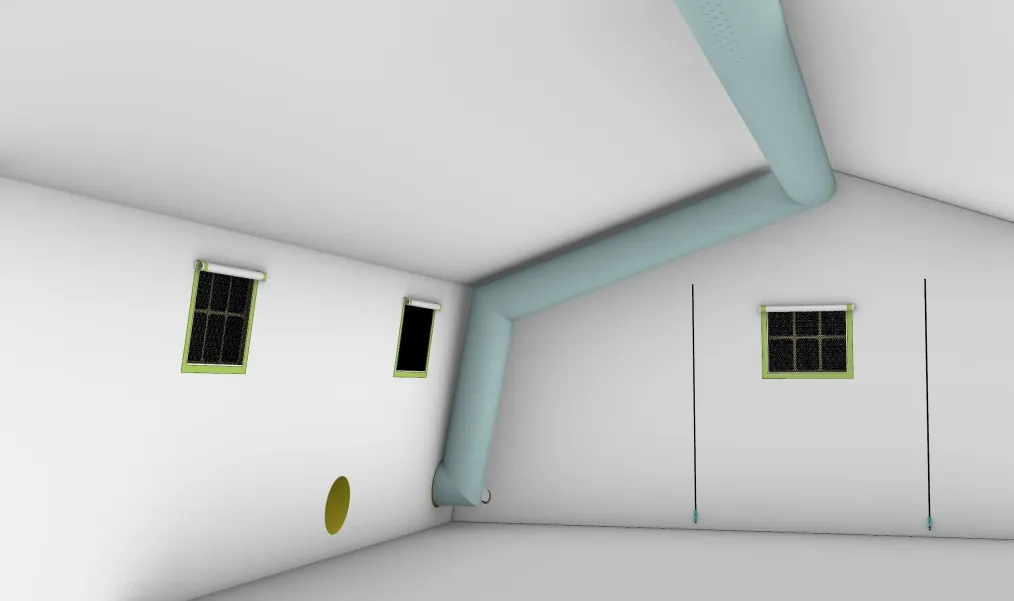
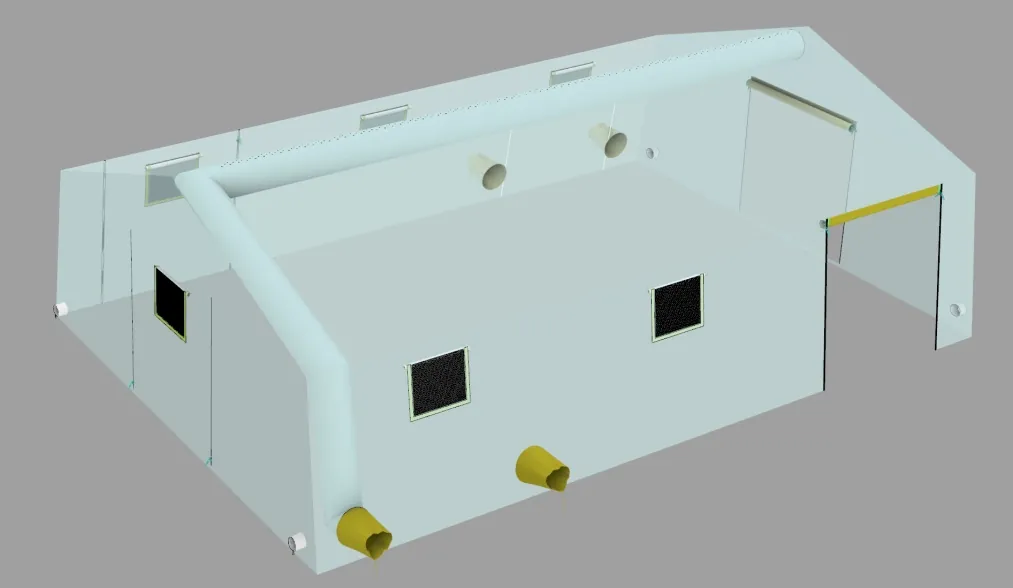
The interface matters as much as the insulation. The reference unit carries 4-8 HVAC service sleeves of ø425 mm plus 4 cable ports of ø150 mm, which lets ducted units feed the cabin without field-cutting the cover. The Rapid Deployment Arch Aluminum Frame Tent page shows this sleeve layout. Match sleeve count to the AC plan at tender stage, because every field-cut hole becomes a leak you own for the deployment.
Heat is also where the data points. Disaster databases such as EM-DAT log heatwaves and cold snaps as recurring, costly events, and shelters in this class deploy into both extremes, which is why the declared operating window runs from -32 °C to +70 °C. In a 50 °C camp, an insulated tent shifts the argument from how many AC units to how small they can be, and that difference compounds across a hundred-tent block.
Cooling an insulated tent has one side effect worth planning for. Moist inside air that reaches a cold cover surface condenses, and an uninsulated membrane wears the result on its underside. A liner moves that dew line away from people and gear, holds moisture in the gap, and hands it to ventilation, so vents and door discipline stay part of the spec.
Comparison: Insulated Liner vs Double Envelope vs Uninsulated
Three envelope builds compete for the same budget, and each wins somewhere. The table compares them the way a camp planner would: cost, cooling effect, condensation behavior, and what they do to the rig schedule.
| Criterion | Insulated liner | Double envelope | Uninsulated |
|---|---|---|---|
| Relative cost | low to medium; one fabric system inside the existing cover | higher; second cover and wider frame | lowest up front |
| Cooling effect | cuts roof radiant gain, buffers night loss | thickest air layer, strongest buffer | none |
| Condensation | liner holds the dew line away from the cabin | gap can vent moisture | wet cover underside |
| Rig impact | hangs from the ridge pulley with the same crew | second envelope adds rig time and parts | baseline |
| Typical fit | AC-cooled relief and medical tents | long-stay camps in extreme climates | short events in mild weather |
For most AC-cooled deployments, an insulated tent with a liner is the entry point, because it upgrades the envelope without touching the frame footprint. Double envelopes earn their keep in long-stay camps where the climate sits at an extreme for months. Uninsulated covers remain defensible for short, mild-weather missions where the budget is better spent elsewhere.
Use Cases: Relief Camps, Medical Units, Industrial Sites
Relief demand follows disasters, which the IFRC describes as serious disruptions that exceed a community’s capacity to cope using its own resources. Camps rise fast, run for months, and get judged against norms that circulate through the Global Shelter Cluster coordination toolkit, so the insulation lines written at tender stage are the ones residents live with. Our Disaster Relief Emergency Tents page shows the shelter family these liner options attach to.
Medical units raise the stakes on temperature stability. Vaccines, IV fluids and electronics tolerate narrower bands than people do, and an insulated tent in a medical row flattens the daily swing that a bare membrane passes straight through. The same logic holds at industrial sites, where workshops, stores and generator shelters protect equipment that hates heat as much as any pharmacy does.
Layout closes the loop. Headcount drives tent count, tent count drives AC count, and the Camp & Facility Space Planner turns headcount and footprint into block rows before anyone prices a liner. Across all of these cases, the insulated tent spec travels with the layout, because a liner set up for a medical row may not suit a crowded relief block.
Frequently Asked Questions
Does an insulated tent help with AC?
Yes, and measurably. A liner cuts radiant load on the ceiling and slows night-time loss, so the same unit holds its set point with shorter cycles and less fuel burned upstream. The AC still does the cooling; the liner decides how much fight it meets.
What is tent insulation made of?
In an insulated tent of this class, typically a technical nonwoven hung as an inner skin. The reference unit uses a Silvertex-type nonwoven at 136 g/m², and the working layer is the still air the fabric traps, more than the thickness of the fabric itself. Building-style foam boards rarely travel well and rarely hang cleanly from a membrane frame.
Can you add insulation to an existing shelter?
Often yes, if the frame offers a hanging path. On the reference structure, the ridge pulley lift lets a small crew pull a liner across from inside, with no scaffolding. Check anchor capacity, liner weight and clearance around HVAC sleeves and cable ports before ordering.
How do you stop condensation under a liner?
Keep the air gap declared and the ventilation real. Condensation forms where moist air meets a cold surface, so the liner’s task is to hold that meeting point away from sleepers and gear while airflow carries the moisture out. Declare the gap at ridge and eave, keep vents unblocked, and walk the cabin after the day’s biggest temperature swing.