2026-09-28 SUNSHINE Engineering Team
Ice Rescue: Equipment and Scene Basics
Ice rescue pairs cold water risks with thin surfaces. Learn the equipment categories and scene discipline that keep rescuers safe.
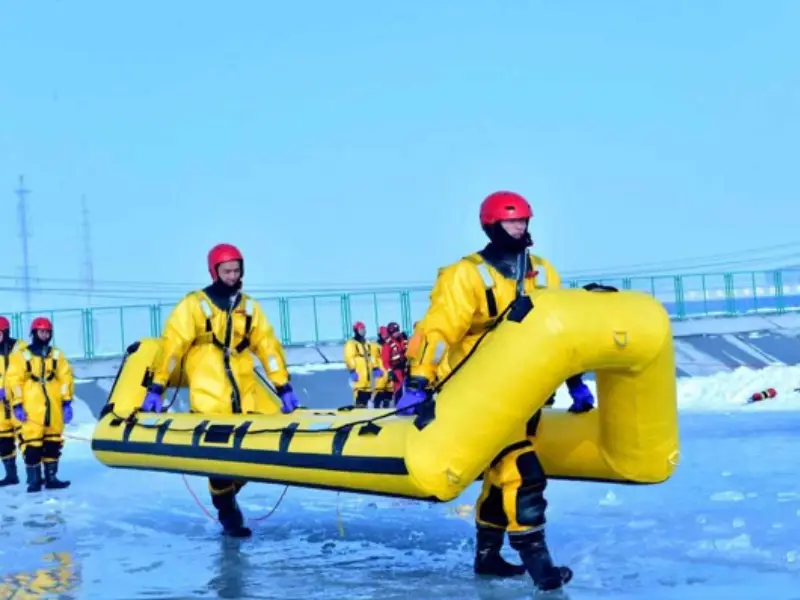
Ice rescue is water rescue with the water hidden, and nearly everything that makes it distinct follows from that one fact. The surface a rescuer must cross is the same medium that incapacitates a casualty, immersion cold works in minutes rather than hours, and the scene itself changes under the weather while the response is underway. Equipment and technique for this discipline therefore prioritize reach and distance: getting flotation and extraction to the casualty without adding bodies to the water, and doing it with gear that works when everything around it is cold, slick, and failing.
Why Ice Scenes Are Different
Cold water changes the clock. Immersion triggers cold shock and rapid loss of capability in the first minutes, which is why public-safety organizations such as the RNLI invest heavily in cold water advice and self-survival messaging, and why ice discipline treats every second between alarm and flotation as the real response time. The surface compounds the problem: ice that held a casualty yesterday may not hold a rescuer today, so the working rule of the discipline is to distribute load, use platforms and flotation, and never let human weight reach broken ice without protection.
The scene also degrades uniquely. Wind, thaw, and refreeze change ice quality hour by hour, snow hides the visual cues that read thickness, and access routes that worked for the first response may be unsafe for the second, so ice operations plan for a scene that is different at minute twenty than it was at minute zero. Maritime rescue bodies, including the IMRF network, exist because rescue as a discipline learns across organizations, and ice response borrows that institutional habit of treating environment as an active adversary.
Equipment Categories
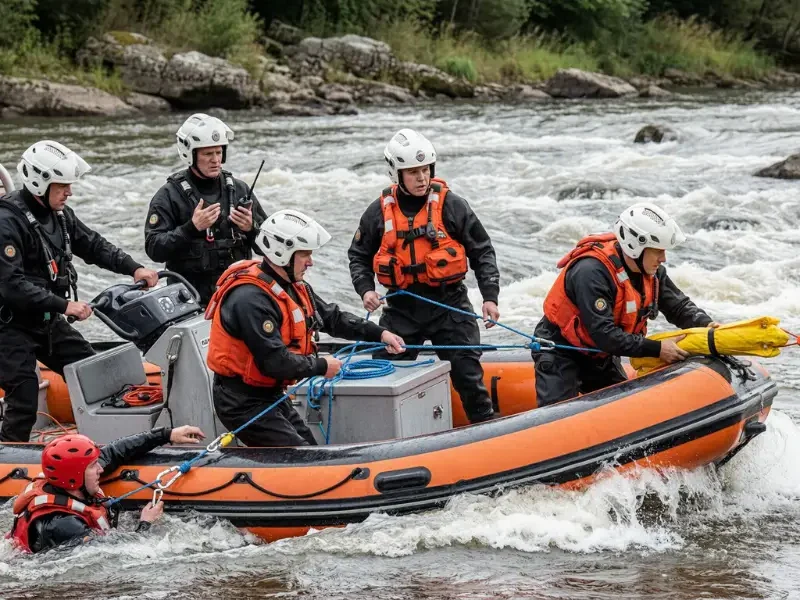
The kit list organizes by reach. Reach tools extend contact to a casualty without approaching the failure zone; throw lines deliver flotation across distance; flotation platforms spread rescuer weight on the surface; and powered or paddle craft designed for ice and cold water, such as the inflatable ice rescue boat in the water rescue line, give teams a working platform that travels over, through, and between ice floes rather than depending on one continuous sheet. Protective suits, tether lines, and scene hardware complete the system, and every category exists to keep the rescuer out of the water the casualty is in.
Selection follows the agency’s water. Inland teams meeting ponds and rivers weight reach and throw systems; coastal and marine agencies meeting broken floes weight craft and suits; and mixed agencies build the full ladder so the first arriving unit can start anywhere on it. The equipment question is never what is best in the catalogue but what the local water actually does in winter, and teams that answer from their own incident history build kits that fit their scenes.
Cold-Water Platform and Extraction Specifications
Reach ladder talk becomes procurement when each rung carries numbers. Three published lines from the SUNSHINE water rescue catalogue show what an ice program actually orders.
| Line | Published figures |
|---|---|
| Inflatable ice rescue boat | Length 450-650 cm; width 140-160 cm; tube diameter 33-35 cm; floor length 90-300 cm |
| Inflatable rescue stretchers IRS-230 / IFRS-210 | Inflation time 40-60 s or less; operating temperature -15°C to +50°C; maximum pressure 15 psi |
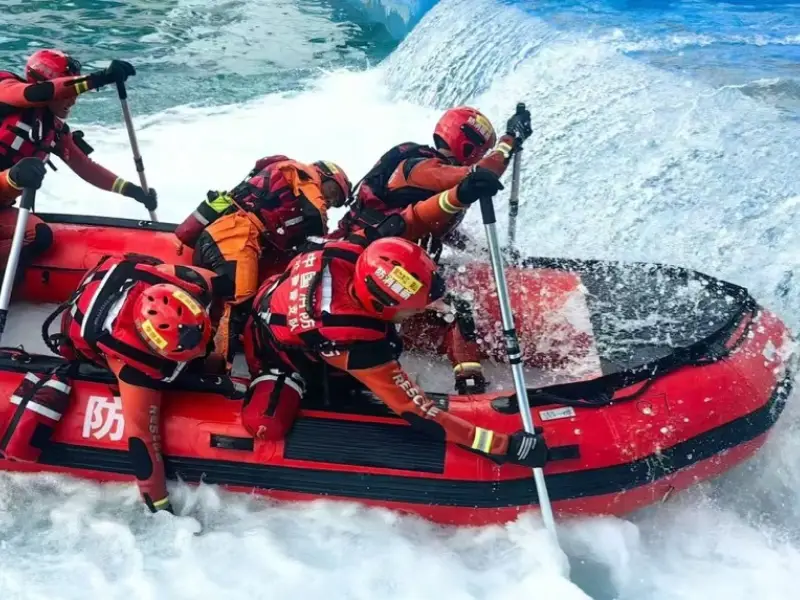
| Self-righting rescue boats IRB400 / IRB460 | Length 400 / 460 cm; engine power 60 hp; weight 130 / 150 kg |
The rows explain each other. The ice boat pairs slim 33-35 cm tubes with a floor length that runs 90 to 300 cm across the range, so the working surface scales with the hull a team fields, while the stretcher line trades deck for speed, inflating in 40-60 s or less because a casualty on broken ice cannot wait for a platform to stiffen; the self-righting pair brings powered reach at 60 hp for teams whose water stays open around the floes. Cold immersion sets the clock behind every row, and the WHO drowning fact sheet keeps that context in view.
Scene Discipline
Ice scenes run on zones and roles. A warm zone where teams stage and casualties recover, a cold zone where protected rescuers work, and a defined boundary between them that nobody crosses unprotected; roles assigned before arrival, including the rescuer, the belay, the spotter watching ice condition, and the recorder logging times and decisions. The marine and offshore rescue equipment context reflects the same structure at larger scale, and the discipline transfers: the plan that assigns every person a place keeps a deteriorating scene from becoming an improvised one.
Communication and medical follow-through complete the response. Casualties come out cold, and the clock does not stop at extraction, so warming, monitoring, and handover belong in the drill, and the incident record belongs in the file that trains the next season. Ice rescue discipline treats the paperwork as part of the rescue, because the scene that was survived today becomes the procedure that saves someone next winter.
The equipment file deserves the same discipline as the incident file. Suits, lines, platforms, and craft each carry inspection intervals and service records, and the rescue equipment catalogue from platforms to general rescue equipment supports that record-keeping with defined product lines, so teams can manage kit by serial and history rather than by memory. Readiness on the ice shelf is built in the equipment room the week before, and the file is how a team knows.
A Winter Readiness File for the Ice Kit
Five checks turn the published figures into a go or no-go file before the season opens.
Pressure discipline: the stretcher line works to a 15 psi maximum, and gauges get calibrated against it before the first callout, because a pressure set in a warm equipment room reads differently once the kit is cold. Temperature matching: kit with an operating window of -15°C to +50°C serves ice and cold water honestly, and anything rated narrower moves to the second line or out of the response cache.
Board and boat geometry: the 33-35 cm tube diameter and 140-160 cm beam of the ice boat decide whether it rides the sled, the trailer, or the roof rack, and the 450-650 cm length range decides what it shares that space with. Inflation rehearsal: the 40-60 s stretcher inflation is a laboratory figure until a crew has met it on scene, in gloves, in wind, at night, and the file records which of the two it is.
Qualification currency: frameworks such as NFPA 1670 for operations and NFPA 1006 for rescuer qualifications give the season its audit spine, and the drills behind them are laid out in what ice water rescue training covers. The equipment file closes the loop: service records and inspection intervals for every line, kept the way the inflatable boat maintenance checklist structures them, so readiness is a record rather than a memory.
Training as Equipment
Skill is the item that degrades fastest between winters. Reach-and-throw accuracy, suit competence in real cold, platform handling around floes, and belay teamwork all decay without rehearsal, so agencies drill them on schedule rather than on memory, and the drill happens on real ice with real protection whenever the season allows. Equipment lists describe capability on paper; training schedules describe capability in February.
Joint training multiplies both. Mutual aid partners, neighboring agencies, and the medical services who receive casualties all rehearse better together, because the handoffs between organizations are where real responses lose minutes, and a drill that includes the ambulance crew and the second agency’s boat fleet surfaces interface problems while they are still cheap. Agencies that train alone stay safe; agencies that train together get faster, and the difference shows in the water, not in the paperwork.
FAQ
Why is ice rescue treated differently from open water rescue?
The surface itself is the hazard and the medium at once: it hides water, fails unpredictably, and changes during the response. Techniques and kit emphasize reaching across ice without adding unprotected weight to it.
What equipment does an ice response rely on?
A reach ladder: reach tools, throw lines with flotation, protective suits, and platforms or craft like inflatable ice rescue boats that work over and through broken ice, with tethers and belay as the safety net behind every movement.
Can rescuers walk to a casualty on ice?
Only with protection, distribution of load, and belay, because ice that failed under a casualty may fail under a rescuer. The discipline’s default is to extend reach from solid footing rather than to trust the sheet.
How do teams keep ice skills current?
Scheduled drills on real ice when possible, scenario training in cold water otherwise, and post-incident reviews that feed procedures. Skills decay faster than equipment, so training is budgeted like maintenance.