2026-09-11 SUNSHINE Engineering Team
Water Rescue Gear: What Each Class Does for Your Team

Water rescue gear falls into four classes: the protection you wear, the tools you throw or reach with, the craft you ride on, and the kit that lifts or recovers. Teams that buy by class cover every step of the reach-swim-row sequence. Teams that buy loose pieces usually discover the gap during a callout. This guide maps each class to the water types you face, then walks through a team kit you can build in order, so the budget lands where the risk lives and stays there as the team grows.
What Counts as Water Rescue Gear?
Water rescue gear is any equipment a responder uses to find, reach, stabilize, or extract a person from water, plus the protection that keeps the responder out of the casualty count. The definition matters for purchasing. Helmets, personal flotation devices, throw bags, rescue boards, boats, and lifting kit all belong to one system, and the system has gaps if any class is missing. Writing the definition into your procurement file also stops scope creep, because water rescue gear bought by class is auditable, while gear bought by catalogue page is not.
Two buying rules keep the system honest. First, protection before tools: a team without certified PPE should not own throw bags yet. Second, craft last: boats are the most photogenic line in the budget and the least used on a typical call log, so they come after the gear that handles the calls you actually get.
The protection layer: PPE that never comes off
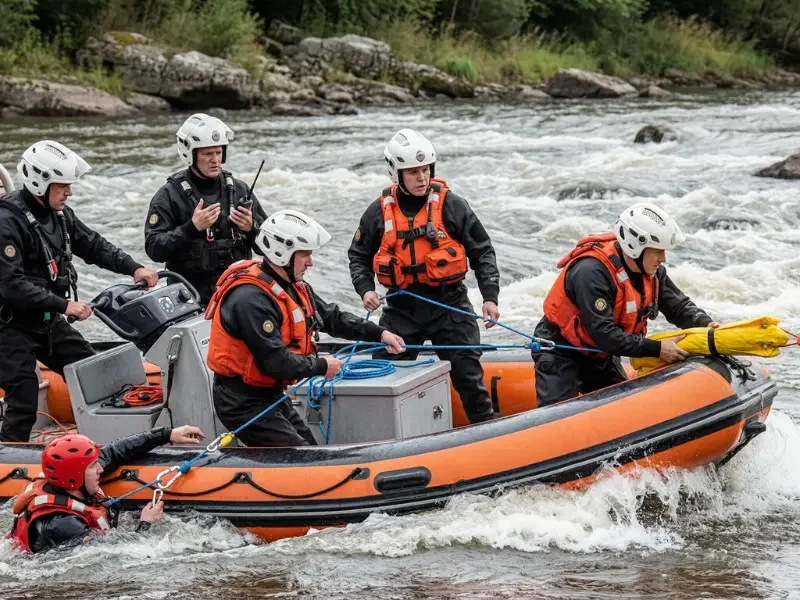
Personal flotation devices, rescue helmets, and wetsuits or drysuits form the layer a responder never removes during an operation. Fit and certification decide this class, and standards give you the audit trail: European PPE carries CE marking under the applicable directives, while US-oriented teams often spec to NFPA-compatible rescue PPE guidance.
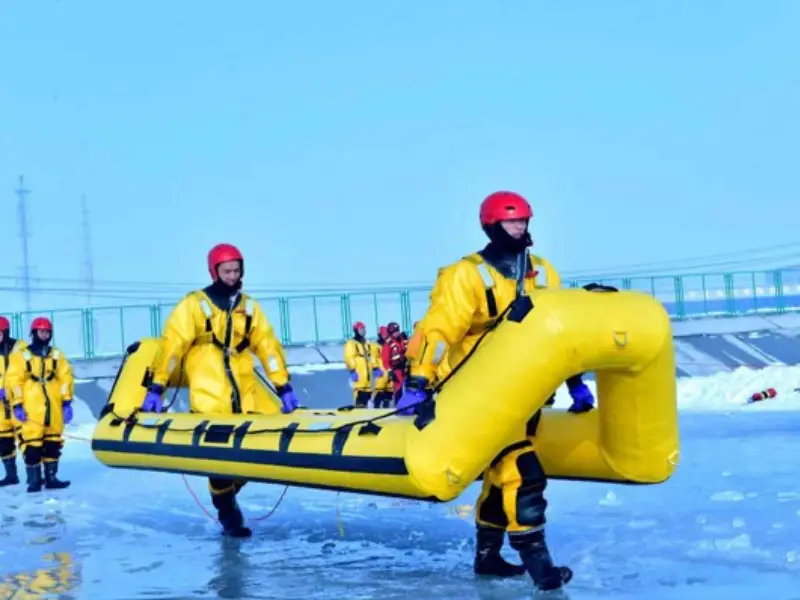
A rescue PFD differs from a recreational vest in flotation profile, quick-release harness points, and attachment slots for knives and strobes. Rescue helmets add water drainage, impact coverage above and behind the ears, and compatibility with visors. Buy sizes, not size ranges, and fit every named team member at delivery. Thermal protection follows the water temperature. Wetsuits trap a layer of water and suit cold rivers up to a point, drysuits seal it out entirely for ice and winter work, and each choice changes the under-layer checklist. Log every suit as an item with an owner, because shared suits age twice as fast and nobody inspects what nobody owns.
Reach and throw tools: the first two minutes
Most water rescues end without anyone swimming. A throw bag with a floating line, a reach pole, and a tether system resolve the majority of accidental drownings when they are within arm’s reach of the responder. The scale behind that fact justifies the budget line: the WHO counts around 300,000 drowning deaths a year worldwide, and 92% of them occur in low- and middle-income countries. This is the cheapest class in the budget and the one that rewards training hours the most, so pair every purchase with counted throws per quarter.
The Four Classes at a Glance
| Class | Typical items | Job it does |
|---|---|---|
| Protection | Rescue PFDs, helmets, suits, gloves | Keeps responders off the casualty list |
| Reach and throw | Throw bags, reach poles, tow tethers | Resolves calls without entry |
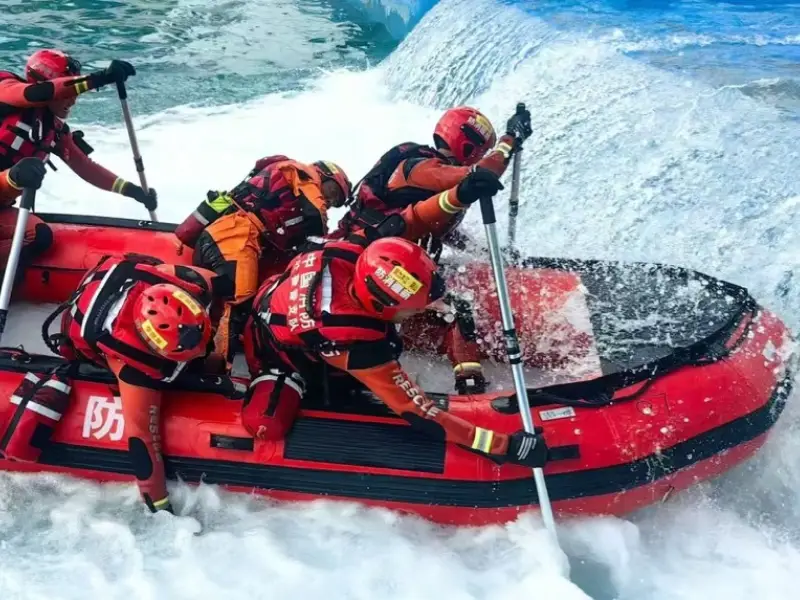
| Craft | Rescue boats, boards, pontoons, sleds | Extends reach into current and flood |
| Lift and recover | Lift bags, stretchers, retrieval kit | Handles submerged and heavy objects |
The table is also a spending order. Protection and reach tools cover the highest share of real callouts for the lowest share of cost, which is why small municipal teams can be effective long before they own a boat. Water rescue gear also wears out at different speeds across classes, so the calendar in your procurement file should name an inspection cycle per class rather than per item.
Matching Water Rescue Gear to Water Type
Fill the row that matches your worst call, not your average one, because water rescue gear is sized for the day that goes wrong.
| Water type | Priority gear | Notes for buyers |
|---|---|---|
| Flat and still water | Reach tools, PFDs, one board | Board or canoe hull covers lakes and ponds |
| Moving current | Swift-rated PFDs, throw bags, line systems | Every item needs a release, nothing catches |
| Flood response | High-flotation PFDs, boats with shallow draft | Debris load rises, motors and props matter |
| Ice and cold | Drysuits, ice rescue sleds, sling systems | Cold shock shortens usable response time |
Match the list to your response area, not to a catalogue. A team on slow canals wastes money on swift-current hulls, and a river team underbuys line systems if it copies a lake crew.
Building a Team Kit Step by Step
- Map your water: write down every response point and classify its current, depth, and access.
- Fit protection first: certified PFDs and helmets for every named member, sized at delivery.
- Stock reach and throw tools per response point, not per team, so the tool is always within two minutes of the water.
- Add craft only when the call log shows entries your reach tools cannot cover.
- Close the loop with lift and recovery kit, training hours, and a documented maintenance calendar.
Training converts the kit into capability, so schedule the hours in the same budget line as the gear. A quarterly pool session covers throws, PFD fitting, and board handling. An annual joint exercise with the fire boat crew covers the craft class. Log both sessions, because grant reviewers and auditors ask for training records before they ask for receipts.

Standards and Markings to Ask For
Standards turn a gear conversation into a purchasing file. In the United States, NFPA 1670 describes operations for technical search and rescue incidents and NFPA 1006 sets professional qualifications for rescuers, and both are common anchors for team capability documents. In Europe, personal protective equipment carries CE marking where the applicable directives cover it, and the national members of CEN and CENELEC maintain the EN standards behind those marks. Ask every supplier which standard each item meets, and record the answer in the tender file. The same file should list where each piece of water rescue gear sits in the training calendar, because standards only protect teams that train to them.
During flood seasons the same discipline applies at the mission level: the IFRC describes early warning, evacuation, and safe shelter as the chain that saves lives in flood events, and equipment that fails its standard breaks that chain at the responder level.
Procurement Pitfalls
- Buying boats before PPE. A rescue boat without a fully fitted crew is a hazard with an engine.
- One-size PFD orders. Flotation that does not fit gets taken off, usually at the worst moment.
- Throw bags without throw training. Counted practice throws per quarter are what make the bag work.
- Mixed fastenings in current. Anything that snags, clips wrong, or rides loose becomes an entrapment risk.
- No maintenance calendar. Webbing, lines, and PFD flotation age, and undocumented gear fails audits and inspections alike. A written check record also answers liability questions before they are asked.

FAQ
What water rescue gear should a new team buy first?
Certified PFDs and helmets for every member, then throw bags and reach poles for each response point. That pair covers the majority of callouts a new team faces. Craft comes later, once the call log proves the need and the training calendar can support it.
How often should water rescue gear be replaced?
Inspect PFDs, lines, and helmets on a written calendar, typically every quarter and after every hard use. Retire webbing and lines with cuts or glazing, PFDs with compressed or waterlogged flotation, and helmets after any significant impact. Documentation of those checks is part of the gear.
Is more expensive water rescue gear always safer?
Price tracks features, not safety alone. The safest kit is the certified kit that fits, gets maintained, and matches the water you respond to. A mid-price setup with logged inspections outperforms premium gear that lives in a locker.
How do you maintain throw bags and rescue lines?
Rinse lines in fresh water after contaminated runs, dry them out of sunlight, and repack the bag so the line pays out without knots. Inspect the sheath by feel along the full length, retire any line with cuts or glazing, and log the retirement date. A bag that has ridden in a car trunk for two years without a check is a decorative item.
When the kit list starts to take shape, size it against your roster and response points with the Rescue Team Equipment Configurator, then compare hull options on our Professional Rescue Boat and Inflatable Rescue Board pages. For the swift-current side of the kit, our guide on how to choose swift water rescue equipment covers PFDs, helmets, and line systems in detail. The two guides share one philosophy: buy by class, train by hour.
References
- NFPA (National Fire Protection Association)
- European Commission, CE marking
- CEN-CENELEC, European Committee for Standardization
- IFRC (International Federation of Red Cross and Red Crescent Societies)