2026-09-29 SUNSHINE Engineering Team
Ice Water Rescue Training: What Teams Practice
Ice water rescue training builds the habits that survive cold shock. Learn what a serious program rehearses and why.
Ice water rescue training exists because the water wins every untrained response. Cold shock and rapid incapacitation are not obstacles that willpower overcomes; they are physiological events that procedures and rehearsal navigate, and the difference between a rescue and a second casualty is almost always preparation. That is the honest case for training programs that treat ice and cold water as their own discipline, and it is why the WHO drowning prevention framework treats intervention capacity, alongside barriers and supervision, as one of the layers that actually reduces drowning deaths, including in cold season contexts.
What Training Actually Rehearses
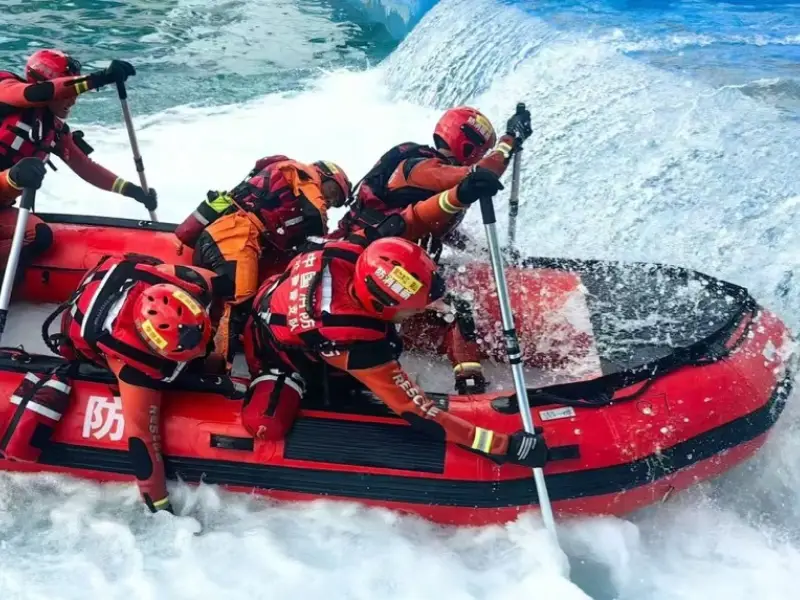
The curriculum rehearses the failure points in order. Self-survival comes first, because a rescuer who cannot manage their own cold shock and float cannot help anyone else; reach and throw technique comes next, extending aid to the ice edge without committing weight to failure zones; platform and craft handling follows, working rescue boats and flotation through broken ice; and belay, tether, and extraction close the loop, moving a casualty from water to warmth as one continuous drill. Every element is practiced in the environment it will be used in, cold water included, because rehearsal at comfortable temperature rehearses a different discipline.
Decision rehearsal matters as much as motor skill. Scene reading, ice assessment, zone setup, and the go and no-go calls that protect teams are practiced as scenarios with uncertainty built in, so the first time a rescuer makes a real abort call is not the first time they have made it. Programs that inject degraded conditions, failing light, uncertain ice, simulated second casualties, into drills produce teams whose procedures bend without breaking, and the rescue craft context matters here too: equipment governed by maritime safety frameworks such as the IMO lifesaving equipment regime carries maintenance and readiness disciplines that training inherits and drills.
Building the Curriculum
A serious program is built from the agency’s own water. Inland ponds, moving rivers, and coastal floes each demand different emphasis, so the curriculum starts from local incident history and the environments teams actually face, then borrows standards and best practice from the wider rescue community rather than importing a generic syllabus whole. Progression protects trainees: competence builds from pool to open water to ice, from single skills to integrated scenarios, with instructor ratios and safety cover matched to each stage, and the rescue boat fleet, including platforms like the professional rescue boat line, gets its own operator tracks alongside swimmer tracks.
Assessment and records turn training into capability. Skills are tested against defined standards, results are recorded per rescuer and per skill, and the record drives the refresh schedule rather than the calendar alone, because the water rescue equipment context and the teams that use it age on different clocks. A program that cannot show its records cannot show its readiness, and audit season always arrives before ice season does.
Instructor capacity is the quiet constraint. A program lives on the number of qualified trainers it can put on the ice with safe ratios, so developing instructors is part of the curriculum, not an afterthought, and agencies that budget for instructor development keep their training calendar full when a single departure would otherwise empty it. The bench behind the bench is what makes capability durable.
Ice Water Rescue Training Equipment Checks
Every drill in this curriculum runs on equipment whose specifications either match the training plan or quietly rewrite it, which is why the spec check belongs to the program rather than to procurement alone. An ice-capable inflatable rescue boat is verified against its stated envelope: hull length of 450-650 cm, width of 140-160 cm, and tube diameter of 33-35 cm, because a boat outside those bands responds in broken ice in ways the drill plan did not anticipate. Inflatable rescue stretchers earn the same attention before they carry a casualty, since the IRS-230 and IFRS-210 reach working pressure within 40-60 s and must never be pumped past the 15 psi ceiling in their specifications. Self-righting craft close the loop, with the IRB400 and IRB460 running a 60 hp engine whose behavior in a recovery evolution belongs in the drill plan as much as in the maintenance file.
The check lives in the training record, not in a drawer at the station. Spec sheets, gauge readings, and service dates sit beside the skill register, so the binder that shows who passed an evolution also shows whether the craft used in it still matched specification. Teams that want an external benchmark can set their equipment records against ILS certification listings for recognized lifesaving programs, and SUNSHINE’s water rescue line is specified and customized to program requirements, which puts the comparison where it belongs, before purchase rather than after a failed check.
Safety and Progression
Training must be safer than the incidents it prepares for. Medical cover, standby rescue, controlled exposure limits for cold water, and hard stop criteria are designed into every evolution, and instructors own the call to degrade or cancel a drill, which itself models the discipline being taught. Progression is gated: no trainee swims ice scenarios without demonstrated open water competence, no one drives craft in floes without flat water certification, and nobody belays a live evolution until they have belayed a dozen static ones.
The same discipline extends to equipment drills. Suits are inspected before and after every cold immersion, boats and platforms get pre and post session checks, and the defects found go into the maintenance file rather than into next week’s surprise, so the training fleet teaches readiness by being ready. Programs that run this way find that their equipment budget behaves, their injury rate stays low, and their teams arrive at real ice with procedures that have already survived February.
Keeping Skills Current
Currency is scheduled, not remembered. Ice skills live in a short season, so serious programs drill reach and throw methods monthly through winter, run at least one full scenario evolution per season on real ice with full safety cover, and use pool sessions and simulation to bridge the gaps, with refresh intervals set by the skill records rather than by tradition. Cross-training with neighboring agencies multiplies the value, shared scenarios surface mutual aid gaps before a real incident does.
Records keep the schedule honest across personnel change. When a rescuer transfers, retires, or joins, the skill register tells the new training officer exactly what the team has and what it needs, and the drill calendar rebuilds around evidence instead of around seniority’s memory. Programs that survive their founders do so because the training system lives in documents like the equipment catalogues teams manage against, written down, dated, and reviewed, rather than in the heads of the people who happened to be there when it started.
FAQ
How often should ice water rescue training run?
Key skills need winter-season drilling with at least one full ice scenario per year, plus pool or simulated refreshers across the year. The record of skill decay, not the calendar, should drive individual refresh schedules.
What does a safe cold water drill require?
Medical cover, standby rescue, controlled exposure limits with hard stop criteria, and gated progression from pool to open water to ice. Training safety models the discipline it teaches, never exceeding protected limits.
Do rescue boat skills need separate training?
Yes, craft handling in broken ice is its own track with its own progression, flat water competence before floe work. Boat readiness disciplines follow the same maintenance and drill routines as team skills.
Can teams train effectively without real ice access?
Largely yes, using cold water venues, scenarios, and simulation, but at least one controlled real-ice evolution per season is the standard for teams whose response area includes ice, because only real ice teaches real ice.