2026-10-16 SUNSHINE Engineering Team
Aluminum Frame Tent Manufacturer: 9 Vetting Checks
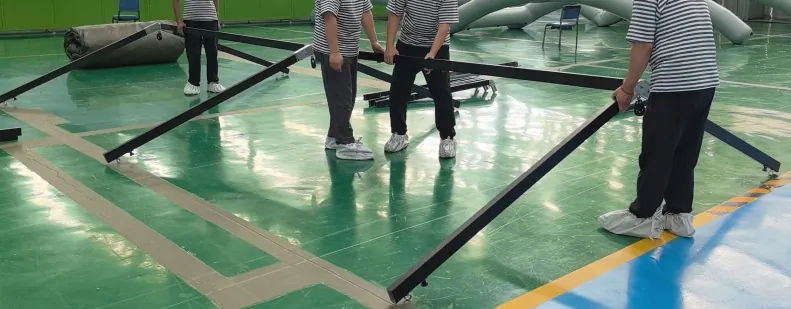
An aluminum frame tent manufacturer builds the structure in its own plant: cutting and anodizing the alloy profiles, casting the connectors, high-frequency welding the PVC fabric, and assembling frames under one management system. A trader resells; a factory answers engineering questions with drawings, alloy certificates and test reports in its own name. The nine checks below cover identity, management systems, materials, workmanship, track record, capacity, export experience, structural proof and delivery terms, and each one maps to a document you can request in writing before money moves.
What an Aluminum Frame Tent Manufacturer Does
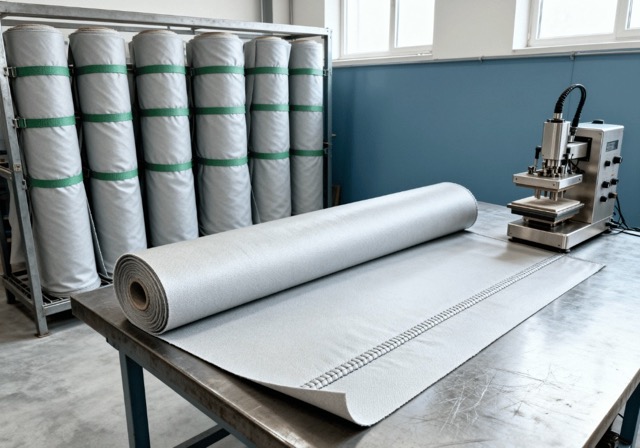
The factory’s core chain runs from raw metal to finished unit. Aluminum arrives as 6xxx-series alloy, and the plant or its named extrusion partner cuts profiles to length, machines the joints and anodizes the surface against corrosion, a treatment the Aluminum Association credits for the metal’s service life in harsh sites. Fabric work runs in parallel: PVC-coated polyester is cut by pattern and joined with high-frequency welds, which fuse the coating into a continuous, watertight sheet.
The point of keeping this chain close is control. An aluminum frame tent manufacturer that extrudes, welds and sews under one roof carries one quality system, one set of drawings and one liable party. Sustainability scoring in institutional tenders favors the material as well, since aluminum’s recycling record is well documented by the Aluminum Association.
One working example runs through this guide. BAODING SUNSHINE ENTERPRISES LTD., trading as SUNSHINE, has manufactured since 2012 in a 2000 m² plant with 130 staff, and sells direct with no regional agents in between. The catalog spans Field Shelters, Functional Materials, Water Rescue, Outdoor Inflatable and Professional Aluminum Frame Shelters, including the Rapid Deployment A-Frame Aluminum Frame Tent and the Rapid Deployment Arch Aluminum Frame Tent.
Fabric is only one delivery format. SUNSHINE’s Z-Fold Emergency Response Modular Unit ships as a folding rigid box for missions that need lockable, hard-sided space, and a source factory says plainly which format fits the job. Buyers asking for OEM tent manufacturing should add logo, color and sleeve layout to the sample sign-off, where an in-house line absorbs the changes on its own floor.
Nine Checks That Separate a Factory From a Reseller
Procurement teams distilled this list from the requirements they send to any aluminum frame tent manufacturer, and each check names the document that proves it. The second check leans on ISO 9001, the quality management standard whose certificate scope matters as much as the logo.
| # | Check | Document or proof to request |
|---|---|---|
| 1 | Direct manufacturing status: frames and fabric made in-house | Business license with manufacturing scope, factory photos, live video walk-through |
| 2 | Management systems | Valid ISO 9001 and ISO 14001 certificates, scope covering tents |
| 3 | Aluminum processing chain: extrusion, anodizing, CNC cutting, cast connectors | Equipment list plus alloy certificates, grades 6061-T6 / 6082-T6 |
| 4 | Fabric workmanship: PVC cutting and high-frequency welding | Equipment list plus a welded sample by courier |
| 5 | Sector track record: medical, military, emergency deliveries | Reference list with client type, year and quantity |
| 6 | Capacity proof: a batch such as 200 units inside the quoted lead time | Production schedule with line assignments |
| 7 | Export experience in your target market | Export records; SASO and G-mark familiarity for Gulf shipments |
| 8 | Structural compliance: 50 kg/m² snow, 110 km/h wind with 140 gusts | Third-party lab report (US Army TOP 10-2-175) plus EN 13782 / EN 1991-1-4 calculation notes |
| 9 | Verification and delivery | Pre-batch sample terms, SGS / BV / Intertek pre-shipment clause, 12-month warranty, manuals in the destination language |
Checks 3 and 8 carry most of the technical risk, and both deserve a closer look.
Alloys and Profiles: The Detail That Exposes a Reseller
Structural 6xxx alloys come heat-treated, and temper matters: 6061-T6 and 6082-T6 are the working grades for tent frames, with the alloy certificate traveling alongside each production batch. Section sizes tell their own story, since a 90 × 46 mm main beam, an 82 × 41 mm insert and a 65 × 30 mm purlin describe a frame engineered for the 6 × 9 m class of shelter.
A trader forwards a catalog. An aluminum frame tent manufacturer supplies the cross-section drawing with tolerances, the temper stamp and the anodizing thickness record, and answers connector questions from the tooling floor. Frame material choice has a real engineering dimension; the Steel vs Aluminum Frame Tent comparison on this site covers the cases where steel still wins.
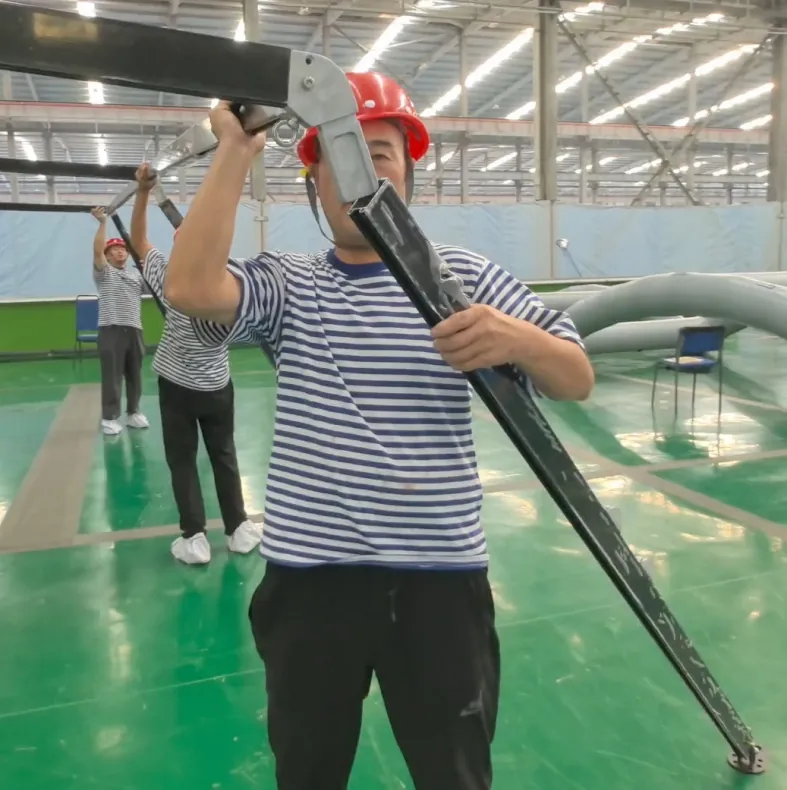
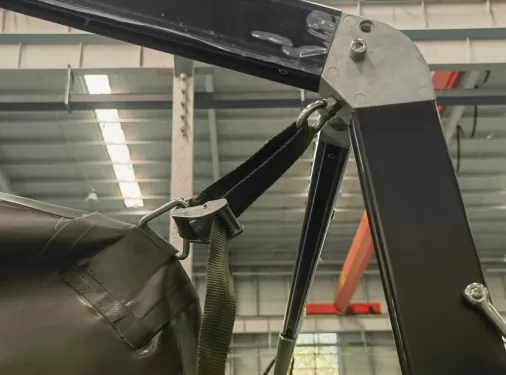
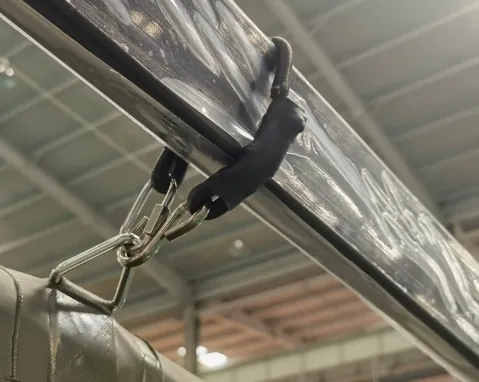
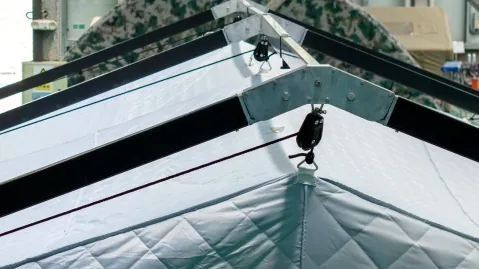
Joints carry the loads. Cast aluminum connectors, among them hinged corners that let a portal frame fold flat for transport and open square in minutes, replace any site welding. The same logic extends to the cover: webbing hooks tie the fabric to the frame so tension adjusts without tools, and high-frequency welds keep the seams waterproof, which is why a welded sample settles check 4 before an order does.
Structural Numbers That Survive an Audit
Three figures anchor check 8. Snow capacity of 50 kg/m², measured on an assembled structure by a third-party laboratory to the US Army’s TOP 10-2-175 method. Wind capacity of 110 km/h with 140 km/h gusts, calculated to EN 13782 together with EN 1991-1-4, both CEN publications that you can verify through the CEN standard search portal. At tent level, ISO 5912 supplies the test methods most institutional tenders reference.
Ask any aluminum frame tent manufacturer to state which numbers are calculated and which are measured. A note on markings keeps the paperwork honest: CE marking on a component declares that part’s conformity, and the manufacturer stands behind the declaration, while the assembled shelter’s structural case rests on the calculations and the lab report. A buyer requests both documents and reads the dates.
How to Vet an Aluminum Frame Tent Manufacturer, Step by Step
A tent factory audit runs in two passes: a remote document review, then an on-site visit. Skipping the document pass wastes the flight. If the mission itself is still open, the Shelter Mission Finder narrows the shelter type before the audit narrows the supplier.
Remote Checks: Vet the Aluminum Frame Tent Manufacturer Before You Fly
Send the request for quotation with a drawing and the loads you expect, then request the nine documents in one letter. A genuine aluminum frame tent manufacturer answers within days, while a reseller stalls to ask its supplier. Verify the ISO 9001 certificate number against the certifier’s public register, and read the scope line: it should name tents or temporary structures, not general trade. Book a live video walk-through of the cutting benches, the anodizing line or its named partner, the HF welders and the sewing hall; a 2000 m² plant tours in twenty minutes on camera.
On Site and Before Shipment
Walk the line with the aluminum frame tent manufacturer’s team and watch one frame come together end to end, checking alloy certificates against heat numbers and spot-measuring anodizing thickness. Sign the sample: a pre-batch unit fixes fabric weight, color, door hardware, sleeve positions and marking before production starts. Write the inspection clause with third-party pre-shipment inspection by SGS, BV or Intertek, and keep container loading under camera. Close the delivery file with a twelve-month warranty, spare parts for connectors and fabric panels, and manuals printed in the destination language.
Source Factory or Trading Company?
A trading company or a local aluminum tent supplier suits small mixed orders and quick replacements. For engineered structures, a source factory and an intermediary differ on the points that decide project risk:
| Aspect | Source factory | Trading company |
|---|---|---|
| Price structure | Ex-works price with no intermediary margin | One or more markup layers above the mill |
| Technical answers | Section drawings, alloy certificates and weld samples from its own line | Answers wait on upstream replies, and detail goes missing |
| Customization | Size, color, logo and sleeve layout at design stage | Catalog variants only |
| Quality liability | One contract, one responsible party | Liability splits between seller and maker |
| Spare parts | Profiles and connectors from the same tooling for years | Continuity depends on the upstream supplier |
An aluminum frame tent manufacturer quotes from its own engineering floor, which is the shortest path between your drawing and the product that ships. Intermediaries still suit small orders and mixed catalogs; institutional buyers audit factories for the rows above, and the audit habit is worth copying at any order size.
Pitfalls That Cost Buyers Money
- Certificates with the wrong name on them. An ISO 9001 certificate held by a sister company, with a scope that skips tents, adds no protection to the deal.
- Design numbers dressed as test results. A calculation can claim a 110 km/h wind rating; only a laboratory report proves the snow case, so ask which document is which.
- Fabric weight without a process specification. A bare “700 g/m² PVC” line means little until the welding method, seam test and UV stabilization arrive in writing.
- The sample switch. A pilot-shop sample followed by outsourced bulk production undoes the whole audit, and the inspection clause exists to catch it.
- Incoterms and language left to the last email. Manuals, markings and spare-part lists in the destination language cost little at order time and a great deal after delivery.
- Wind figures without a gust value. A bare wind number is marketing; 110 km/h with 140 km/h gusts to EN 13782 is a specification.
FAQ
How do I confirm a supplier is an aluminum frame tent manufacturer instead of a trader?
Ask for three items in one letter: the business license with manufacturing in its registered scope, a live video walk-through of the frame and fabric lines, and an alloy certificate carrying the supplier’s own name. A reseller can show a catalog, yet the certificate chain stops at its upstream mill.
Does the choice between 6061-T6 and 6082-T6 change the order?
Both are heat-treatable structural grades, and either serves in a tent frame when the section is designed for it. The certificate matters more than the label, so request the alloy certificate per batch, confirm the temper, and keep the section drawings with the offer.
How long does a factory audit take?
The desk pass runs in days once the nine documents arrive, and a site visit to a plant of around 2000 m² typically fits into one or two days. Sample lead time follows the specification and runs on its own clock.
What approvals apply for Middle East deliveries?
Saudi Arabia runs on the technical regulations published by SASO, and Gulf customs union states use the G-mark, with the official GSO page available in Arabic, so plan for an Arabic-literate checker. For European destinations, CE marking applies at component level, with the assembly’s structural case carried by EN 13782 calculations and lab reports.
How should minimum order and sample terms be handled?
Put both in the opening request itself, ahead of any follow-up: sample quantity, sample cost, and whether the sample price credits against the batch. Tie the batch release to the signed sample and the pre-shipment inspection clause, so quality keeps a paper spine from the opening fabric cut to the last aluminum frame tent in the container.
References
- Aluminum Association, aluminum’s properties
- Aluminum Association, aluminum recycling
- ISO 9001, quality management systems
- ISO 5912, tents: requirements and test methods
- CEN standard search portal
- European Commission, CE marking
- SASO, Saudi technical regulations
- GSO, Gulf Conformity Mark (G-mark), page in Arabic