2026-07-15 SUNSHINE Engineering Team
Emergency Tarp Shelter for Heavy Rain and Bugs
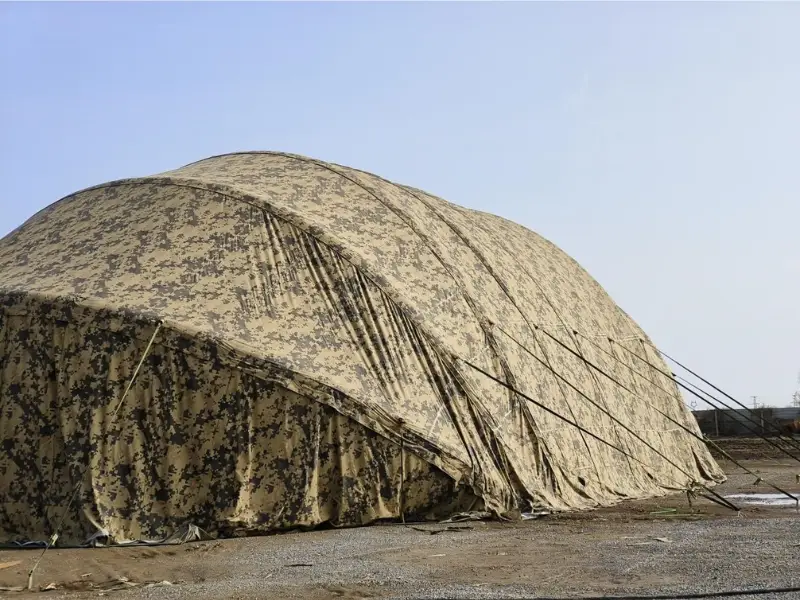
A tarp can stop rain from falling straight down and still leave occupants wet, cold, exposed to insects, or standing in runoff. The difference between overhead cover and a dependable emergency shelter is not one fabric specification. It is the way the roof, edges, ground, anchoring, ventilation, and operating routine work together.
Core judgment: treat rain control, airflow, insect exclusion, and site drainage as one shelter system. Improving one element while ignoring the others can simply move the failure somewhere else.
Why Waterproof Fabric Is Only the First Layer
Heavy rain tests every path water can take. Water can pass through damaged fabric, but it can also travel along cords, enter at low edges, splash under an open wall, collect on a shallow roof pitch, or flow across the floor from higher ground. A useful inspection therefore starts outside the occupied area.
Check whether the roof geometry sheds water without creating pockets. Follow the expected runoff path from the roof to the ground and then away from the shelter. Doors should not open into the lowest point of the site. Equipment, bedding, electrical connections, and medical supplies need separation from likely wet zones. These principles apply whether the cover is a simple tarp or an engineered inflatable field shelter system.
The UNHCR emergency shelter guidance emphasizes adapting shelter to climate and local context rather than treating one shelter type as universally suitable. That means rainfall intensity, wind direction, soil, drainage, expected occupancy, and duration all belong in the requirement.
What a Tarp Data Sheet Should Tell You
Emergency buyers often receive a tarp offer that lists little more than size and color. A usable data sheet states the fabric polymer and coating system, the mass per unit area, the weave construction, grommet material and spacing, seam construction, and the supplied sheet dimensions. Where an offer cites a published specification, ask for the test report that matches the lot being shipped. SUNSHINE covers the practical side of these figures, including GSM, weave, and grommet checks, in its heavy duty tarp selection guide.
Polyethylene tarpaulins have a dedicated product specification, ASTM D6476, that a supply contract can cite. A cited standard gives procurement a shared vocabulary for material and construction, which makes substitution during fulfillment visible instead of silent. A supplier who cannot map the offered lot to the cited specification has not answered the technical question.
Site Drainage and Anchoring Come Before Occupancy
A dry roof cannot compensate for a bad site. Before deployment, walk the footprint and the surrounding ground. Look for channels, depressions, soft fill, evidence of earlier flooding, sharp debris, vehicle routes, and buried services. Identify where water will go if a storm lasts longer than expected.
The UK Health and Safety Executive advises checking ground load-bearing capacity, structural anchoring points, flood behavior, prevailing wind, and underground-service hazards when positioning temporary structures. Its venue and site design guidance is written for events, but these site questions transfer directly to temporary emergency installations.
Use a deployment checklist:
- Mark the clean footprint and runoff direction.
- Confirm the anchoring method is compatible with the actual ground.
- Keep entrances and accessible routes away from drainage channels.
- Establish a post-rain inspection route for anchors, roof tension, edges, and floor conditions.
- Define the wind or water threshold that triggers evacuation or shutdown according to the approved system manual and local plan.
Airflow and Insect Control Must Work Together
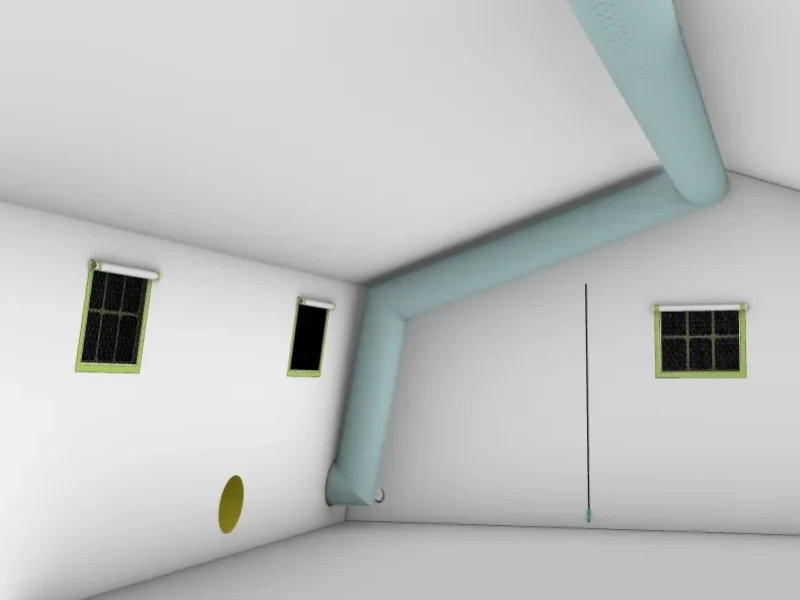
Closing every gap may reduce mosquitoes, flies, or wind-driven rain, but it can also trap heat and moisture. Opening large unprotected gaps improves airflow while creating a direct route for insects. The practical answer is controlled ventilation: screened openings in intentional locations, closable weather flaps, and an operating procedure that changes with rain and temperature.
UNHCR’s safe and secure settlements guidance calls for sealed roofs and walls, drainage that directs water away, climate-appropriate ventilation, and shelter design that protects occupants from vectors and animals. These are connected requirements, not separate accessories.
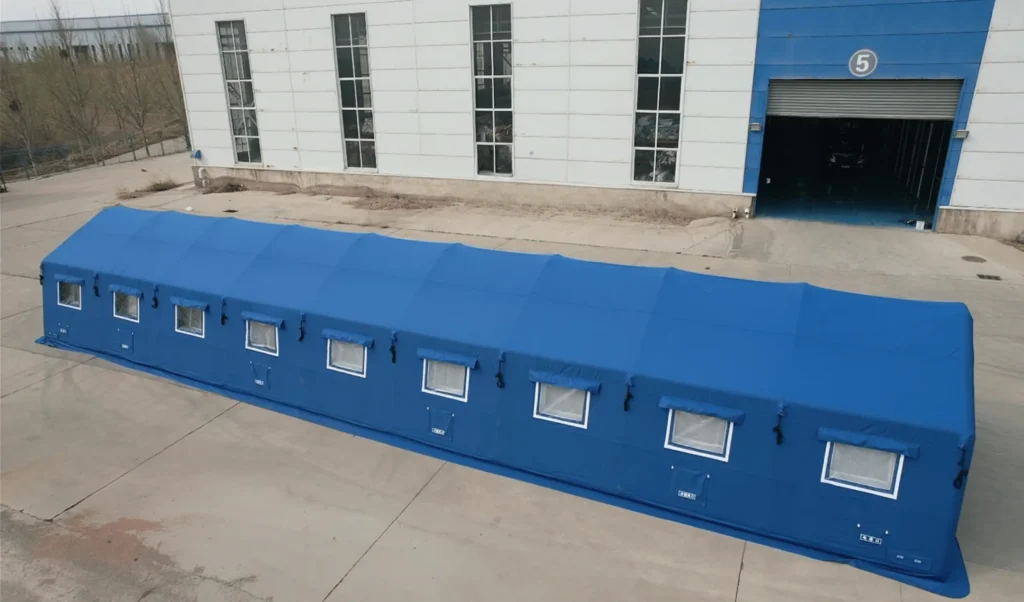
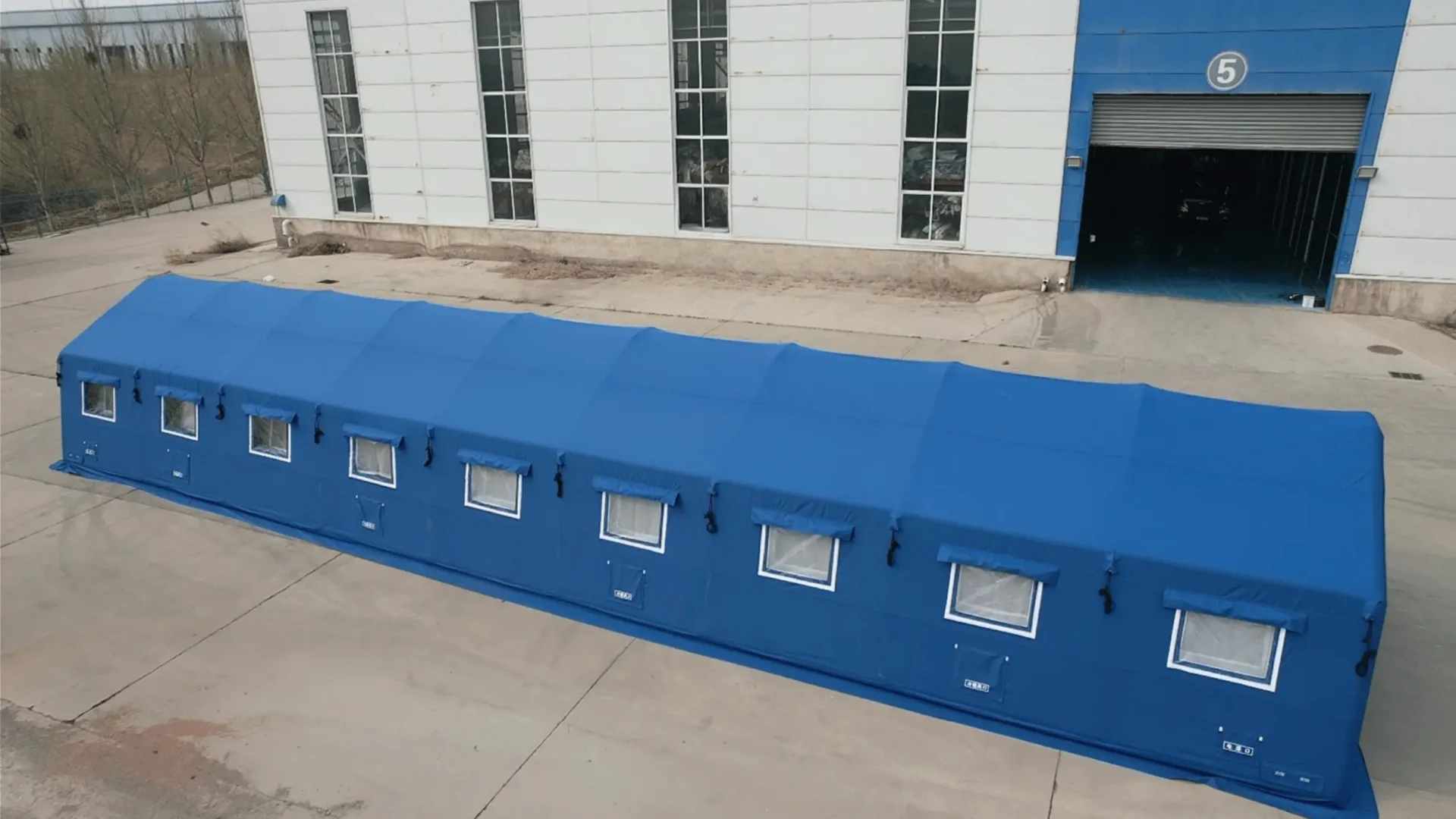
*Official SUNSHINE shelter photograph illustrating how an enclosed system can combine weather flaps with distributed openings; project-specific performance must be verified separately.*
For procurement, ask how an opening is screened, sealed, repaired, and operated during wind-driven rain. Ask whether insect protection remains effective at doors, cable passages, floor joints, and module connections. A mesh window is not a complete vector-control plan if the entrance must remain open all day.
Tarp or Enclosed Shelter: Match the Mission
- Deployment purpose: a basic tarp provides short-duration overhead cover; an enclosed field shelter can support a controlled occupied workspace or accommodation.
- Rain management: tarp performance depends heavily on pitch and site; an enclosed system can specify roof, wall, floor, and opening details together.
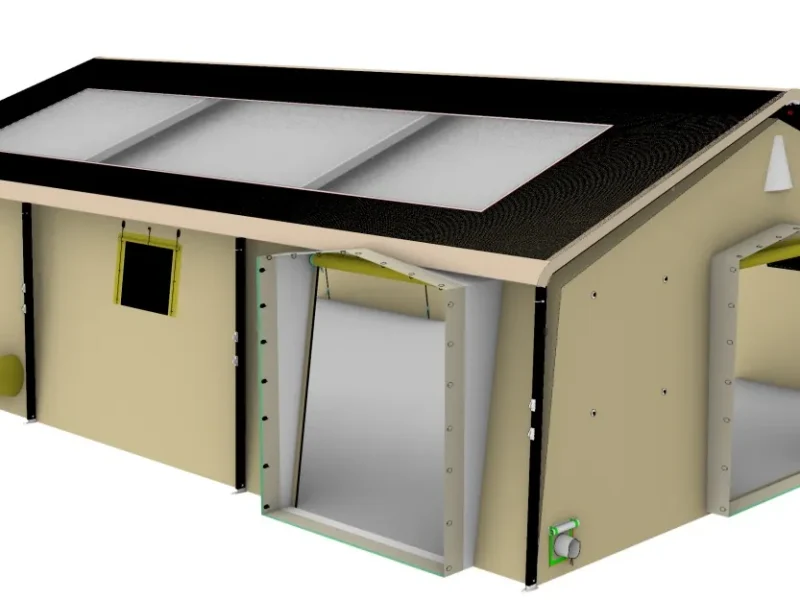
- Insect control: a tarp normally needs separate netting; an enclosed shelter can integrate screened openings and closable entries.
- Privacy and zoning: a tarp offers limited separation; an enclosed shelter can support partitions and controlled access.
- Maintenance: simple tarp components need frequent field adjustment, while an enclosed system needs an inspection and spare-part plan tied to its documentation.
A tarp remains useful when speed, low mass, and flexible coverage dominate the mission. It becomes a poor substitute when the operation needs privacy, controlled access, cleaner storage, protected medical activity, longer occupancy, or managed environmental openings. Buyers can compare those broader requirements through SUNSHINE’s emergency relief application overview and the wider emergency equipment applications.
Verified Specifications for the Step Beyond Tarps
When the requirement outgrows a tarp, the conversation moves to published platform specifications. The figures below come from current SUNSHINE platforms and show the level of evidence a buyer should demand for any enclosed shelter offer.
| Platform | Published specification points |
|---|---|
| Disaster relief emergency tent | Wind resistance Beaufort 8 or above (roughly 17 to 21 m/s); snow load at least 20 kg/m2; working pressure 18-22 kPa; re-inflation interval at least 7 days |
| Z-fold emergency response module | Floor area about 14.6 m2; installation 4-5 h with 3-4 persons; folded size 5900 x 2480 x 450 mm; container loading up to 10 units per 40HQ |
These two platforms answer different questions. The relief tent line carries the weather, snow, and pressure figures that a sustained occupation has to justify, while the Z-fold module trades enclosed volume for transport density and a defined setup crew and time budget. Published figures open the verification conversation; they do not replace the configuration-specific documentation described in the next section.
Relief programs rarely buy one shelter in isolation. The Global Shelter Cluster coordination toolkit documents how shelter responses are coordinated at field level, and UNHCR guidance on sustainable shelter construction addresses the construction detailing that decides how a shelter performs over its service life. SUNSHINE publishes the referenced platforms as the disaster relief emergency tent and the Z-fold emergency response module.
A Requirement Sheet Prevents the Wrong Purchase
Do not begin with a product name. Begin with conditions and tasks. Record the expected duration, occupancy, climate, surface, rainfall, wind exposure, accessibility needs, equipment load, privacy zones, cleaning routine, and inspection owner. Then ask suppliers to respond to that same requirement sheet.
⚠️ Do not invent limits: wind ratings, water resistance, anchoring loads, inflation pressures, fire behavior, and temperature ranges must come from the exact offered configuration and its verified documentation.
Frequently asked questions
Can a tarp be fully bug-proof? Only when the complete enclosure is addressed, including netting, door behavior, floor edges, and service penetrations. Adding mesh to one opening does not close other routes.
Should drainage trenches be dug around every shelter? Not automatically. Ground disturbance may be restricted, can create trip hazards, and may redirect water toward other people. Use the approved site plan and local environmental rules.
What should be inspected after heavy rain? Inspect anchors, tension, pooled water, roof shape, wall and floor joints, entrances, runoff paths, electrical separation, and any movement of the structure.
When the mission requires an enclosed, configurable response space, send the site conditions and operational requirement sheet through SUNSHINE’s project contact channel. That creates a much safer starting point than asking for a generic rainproof tent.