2026-07-09 SUNSHINE Engineering Team
Inflatable Hangar Tent
Rapidly deployable environmental protection for aircraft, vehicles and other critical assets.
Applications
Storage, Rapid Deployment, Environmental Protection, Critical Asset Protection, On-Site Deployment
Deployment scenarios for large asset enclosures
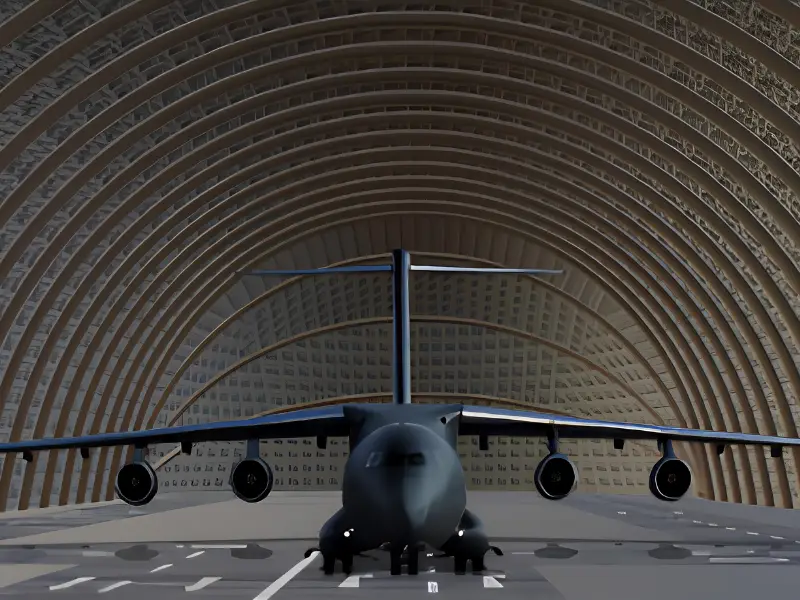
Forward airstrips, seasonal air bases and operators without hangar capacity use these enclosures to park light aircraft, rotorcraft and drone fleets out of the weather. The 500 m² model spans 32 by 21 m with an 8.5 m ridge, sized so a light aircraft or a folded-rotor helicopter sits inside with ground-crew clearance. The 1,000 m² model, 58 by 35 m at 13.4 m high, takes larger airframes or several aircraft together with tow equipment. Tow paths and ground-crew clearance shape the layout as much as the airframe does.
The same enclosures shelter patrol boats between deployments, oversize industrial modules and convoy vehicles staged for disaster response. A hangar-scale inflated structure concentrates a large sail area on one pitch, so siting decisions weigh the regional storm record, and the EM-DAT international disaster database is one reference planners use for that history. Structural comparisons with framed buildings start with Aluminum Frame Tent vs Inflatable Shelter Compared, and airbeam basics are laid out in What Makes an Airbeam Tent Different.
Reading the engineering numbers
The two footprints, 32 by 21 m for the 500 m² enclosure and 58 by 35 m for the 1,000 m² unit, set the planning grid. Door width governs wingspan or vehicle beam, ridge height of 8.5 m or 13.4 m governs tail height, and clear floor length governs tow sequences, so check aircraft or vehicle envelopes against all three dimensions at once.
Puncture resistance of at least 1,000 N addresses the real hazard inside a hangar: ground handling gear, tie-down hardware and tow bars scraping the lower fabric. The -43°C to +50°C operating range covers desert airfields and northern winter bases in one datasheet. For anchoring and ballast engineering on large open pads, site engineers commonly reference steel design provisions such as AISC 360. Field behaviour in wind is treated in Inflatable Tent Wind Resistance: A Field Guide.
Questions large-structure buyers raise
Will a specific aircraft fit the 500 m² model?
The enclosure spans 32 by 21 m with an 8.5 m ridge, so fit depends on wingspan or rotor diameter, tail height and the tow path you use. Rotorcraft with spread rotor bars change the answer quickly. The SUNSHINE engineering team checks clearance drawings against specific airframes.
How is a 1,000 m² structure anchored?
Anchoring for the 58 by 35 m enclosure is engineered per site, driven by soil bearing, wind exposure and whether the pitch is seasonal or semi-permanent. No universal anchor pattern fits every pad. The engineering team issues the anchoring design from the site survey.
Can the roof carry snow in a continental winter?
The published highlights for this model line list dimensions, puncture resistance and operating temperature, not a snow load figure. Snow performance depends on roof geometry, pitch and the site’s snow regime, which places it outside the standard datasheet. Confirm the snow requirement with the SUNSHINE engineering team before ordering for heavy-snow regions.