2026-10-26 SUNSHINE Engineering Team
Heavy Duty Polyethylene Tarp: Reading the Spec Sheet
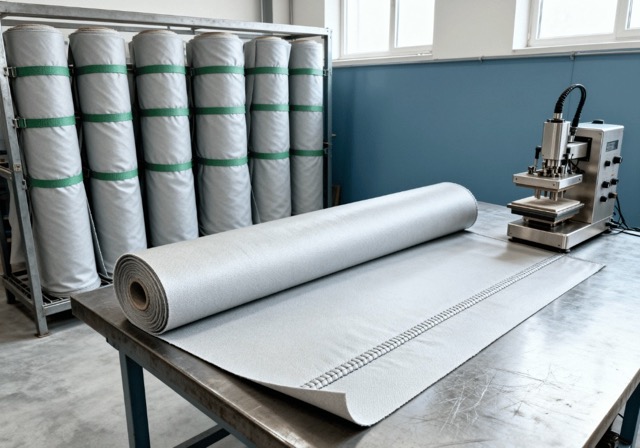
A heavy duty polyethylene tarp is read, and bought, through five numbers: weave count, GSM weight, thickness in mil, the UV additive package, and tensile and tear values. Those five lines predict, with fair accuracy, whether a sheet lasts one season in the sun or four. Buyers who skip them end up purchasing by price per piece, which is how yards fill with faded covers that retire after a single monsoon.
The reading order below follows the way a mill builds the product: weave, then weight, then thickness as a cross-check, additives for outdoor life, strength numbers for failure mode. The same five lines work for one roll or for a container-load qualification of heavy duty polyethylene tarp stock. If you are still shortlisting across materials, the broader heavy duty tarp selection overview handles that step; this piece stays inside one material.
What a Polyethylene Tarp Is Made Of
Start with the sandwich. A PE tarpaulin starts as a weave of high-density polyethylene tape, thin flat strips extruded from HDPE, which form the warp and weft and carry the load. Low-density polyethylene film is then laminated onto both faces, and that film is what holds water out, since a bare weave is full of gaps.
So woven polyethylene behaves like rope with a plastic skin. The tapes take tension, the film sheds water, and the additives in the film decide how long the skin survives daylight. Nearly every line on a heavy duty polyethylene tarp spec sheet measures one of those three layers.
Relief agencies treat the category as core inventory. Tarpaulins appear in UNHCR guidance on sustainable shelter construction as a primary covering material, and the Global Shelter Cluster coordination toolkit carries the item specifications humanitarian buyers order against, with sheet weights commonly specified around 200 g/m² for relief use. Those public specs give commercial buyers a free benchmark.
The Numbers on a Heavy Duty Polyethylene Tarp Spec Sheet
Five lines carry the decision, and each one is checkable at receipt. That is what makes a heavy duty polyethylene tarp one of the few textile buys a site engineer can audit with a scale, a ruler and a hand pull-gauge.
Weave count
Weave count is tapes per inch in each direction, written warp × weft, as in 10 × 10. Heavy duty builds commonly run from about 8 × 8 up to 14 × 14. A denser weave puts more load-carrying tapes under any tear, so higher counts generally mean better tear stop and a tighter surface for the film to seal. Count and weight rise together in practice, since more tapes mean more polymer per square meter.
GSM weight tiers
| GSM band | Typical build | Where it fits |
|---|---|---|
| 100 g/m² | light weave, thin film | short-term cover, pallet wrap, indoor separation |
| 150 g/m² | mid weave, standard film | seasonal cargo cover, scaffold sheeting in calm weather |
| 200 g/m² | dense weave, heavier film | relief tarpaulins, long-run site cover, groundsheets |
| 250 g/m² and up | reinforced edges, extra film | repeat-use industrial cover, lining and containment work |
GSM is grams per square meter, the weight of the finished laminate. It is the best single filter when comparing tarp GSM across suppliers, because it bundles weave density and film weight into one number, and a sample cut plus a scale will audit it.
Thickness in mil
North American sellers quote polyethylene tarp thickness in mil, thousandths of an inch, and retail heavy duty stock runs roughly 10 to 20 mil. Thickness moves with GSM in direction, since more polymer per square meter gives a thicker sheet, but the ratio shifts with weave density and with how the weight splits between tape and film, so there is no honest universal conversion formula. Treat mil as a cross-check on GSM and ask which figure the mill’s quality control actually measures.
The UV package
UV stabilizers are compounded into the film and, on better builds, into the tapes as well. This is the line sellers mention least and buyers feel most, because sunlight ends more outdoor covers than wind or handling do. Spec outdoor life by season count and climate band, and order to that spec, since the same fabric body can carry different stabilizer loads for different duty. The stabilizer load is what separates a one-season heavy duty polyethylene tarp from a build ordered to survive four.
Tensile and tear values
Tensile strength for coated fabrics is commonly measured on CRE machines under ASTM D6614, which reports warp and weft breaking values separately. Tear values deserve equal weight in service, since a sheet that resists a tear starting at a grommet rides out gusts that a low-tear sheet does not. Read both numbers per direction and treat any spec sheet that prints one strength figure for the whole sheet with care. Water resistance belongs on the same page: coated fabrics are tested against ISO methods, and ISO 22958 is a common reference there.
PE, PVC or Canvas: The Decision Table
| Property | Laminated PE | Coated polyester (PU/PVC) | Canvas, cotton |
|---|---|---|---|
| Weight at equal duty | lightest | heaviest | middle |
| Cost per square meter | lowest | highest | middle |
| Outdoor life | set by the UV package | longest of the three | poor, rots when stored wet |
| Seam method | heat-sealed film seams | weldable, high frequency or hot air | stitched, needs sealing |
| Breathability | none | none | some, kinder to condensation |
| End-of-life stream | PE recycling | coated or PVC stream, more restricted | textile stream |
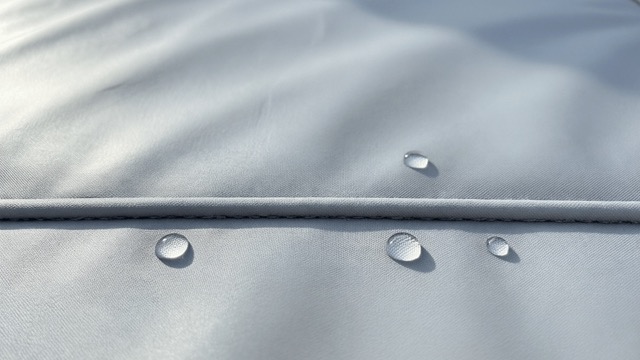
Read the table against the duty. For seasonal, cost-led jobs, a heavy duty polyethylene tarp wins on weight and price per square meter. Coated polyester takes welded seams, years of continuous exposure and daily abrasion against steel, while canvas survives where condensation and handling matter more than weather. At building scale the same materials age differently, and the PVC vs PE tents for storage article works that longer case.
A note from our own range: SUNSHINE runs its fabric and tent plant in Baoding, China, founded in 2012, around 130 people on a 2,000 m² site, selling factory-direct. Alongside the PE line, the plant coats its own 1000D Polyester with PU Coating fabric, a heavier, weldable build for tent bodies and repeat industrial use. The two lines sit side by side because the duties differ. Naming drifts between markets, and the vocabulary in ISO 7152 for camping tents and awnings is a useful referee when a tender says tarp but draws a tent wall.
Acceptance Checks at Receipt
Bulk lots are where spec sheets and cargo part ways, so inspect at the dock while the container is still under your control. Every line on a heavy duty polyethylene tarp spec sheet maps to one of the checks below, and an hour of sampling catches most defects.
| Check | Method | Pass signal |
|---|---|---|
| GSM sample cut | cut 100 × 100 mm swatches from three rolls per lot, weigh on a 0.01 g scale | weight sits within the ordered tolerance |
| Weave count | count tapes per inch against a ruler, both directions, backlit | matches the ordered count, no skipped tapes or wide bands |
| Laminate and seams | flex the film and inspect seam lines along the roll | no delamination, no pinholes, seams uniform |
| Grommet pull | pull a sample of grommets with a hand scale | grommet stays seated at working load |
| Marking and packing | read roll labels against the purchase order | GSM, weave, color and roll length all match |
If a lot fails, photograph the evidence and keep the swatches before unloading finishes, then cite the inspection clause of the purchase order while the goods are still on your side of the gate. A failed heavy duty polyethylene tarp lot is cheap to refuse at the dock and expensive to refuse in the field. European tenders sometimes add a covering-standard requirement, and the CEN standards search is where the current EN references live.
Field Jobs Where a PE Tarp Wins
Four duties suit PE on economics and handling.
- Ground cover under shelters, where the sheet takes soil abrasion and rotates out cheaply; a heavy duty polyethylene tarp under a relief tent keeps the floor dry and the deck clean, and the rapid deployment shelter specification overview shows the unit that sits above it.
- Cargo and commodity cover on stacked pallets, open trucks and parked machines.
- Scaffold sheeting and site enclosure in moderate weather.
- Emergency water collection, where a clean film surface is the point, with potable-contact ratings confirmed separately for drinking-water schemes.
Change material when the duty changes. Welded seams that hold for years, or daily abrasion against steel edges, belong to coated builds, and the table above shows where each material stops competing. Where a tender carries a flame-related clause, flame-retardant additive packages exist for specific tenders; treat it as one spec line to confirm with the mill.
Frequently Asked Questions
Does a heavier GSM mean a better tarp?
Higher GSM adds polymer, so it usually adds tear and abrasion margin, while weave quality and the UV package decide lifespan. A 150 g/m² sheet with a strong stabilizer load can outlast a heavier sheet with a weak one in the same sun. Buy GSM for strength duty and the UV package for calendar life.
How thick is a heavy duty polyethylene tarp in mil?
North American retail specs run roughly 10 to 20 mil for heavy duty grades. Thickness moves with GSM but has no fixed conversion, since weave density and the film split both shift the ratio. Ask which figure the mill’s QC measures and hold the shipment to that one.
How long does a heavy duty polyethylene tarp last in the sun?
That depends on the UV package, the climate band and the season count the build was ordered for. Order to a season count and a latitude band, and the sheet retires on your schedule instead of mid-job.
Can PE tarps be welded or only stitched?
Factory seams on PE laminate are heat-sealed, and field repairs use repair tape or a heat gun with a roller. Canvas takes stitching, and coated polyester welds by high frequency or hot air. Match the repair method to the material, or the patch becomes the failure point.