2026-09-09 SUNSHINE Engineering Team
Disaster Relief Tents: Specs That Matter When You Buy
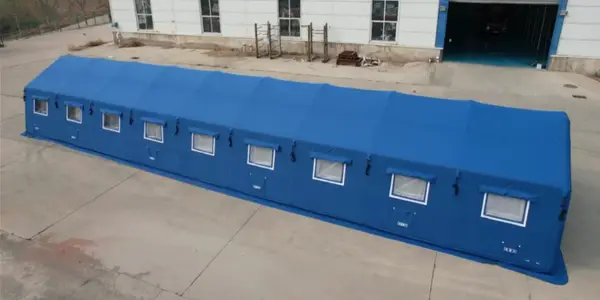
The right disaster relief tents are decided by four numbers, not by looks. Deploy time per unit, people covered per footprint, packed volume per truck, and the frame’s wind rating decide whether a purchase works in the field. A tent that pitches in 15 minutes by four people beats a cheaper model that needs a crane, because in the first 72 hours of a flood, crew hours are the scarcest resource. This guide walks through the specs that decide a relief purchase, the cost lines that tenders forget, and a checklist you can score supplier bids against.
What Counts as a Disaster Relief Tent?
A disaster relief tent is shelter that a relief agency can transport, pitch, and hand over to survivors or responders without construction skills. It differs from a camping tent in three ways. It is sized for families or functions, not for backpacks. It survives weeks or months of continuous exposure, not weekends. And it carries documentation, such as flame resistance and wind ratings, that procurement files can audit.
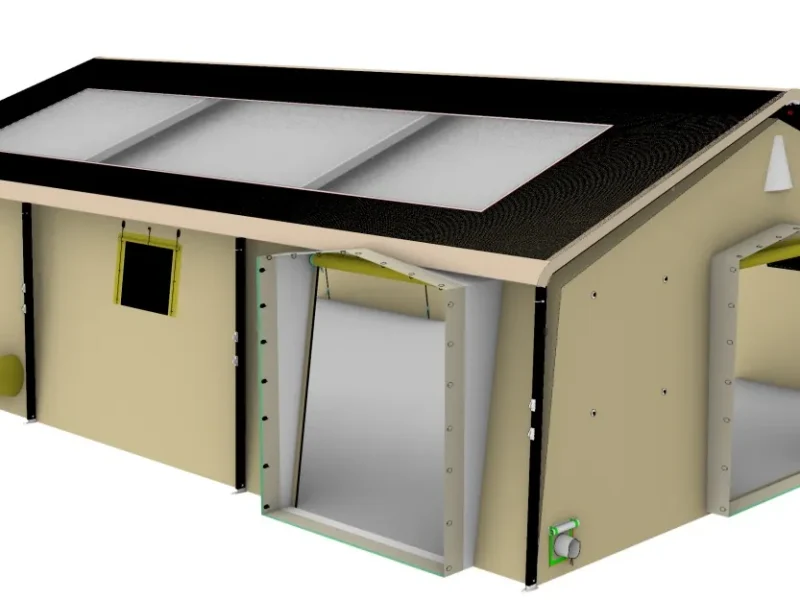
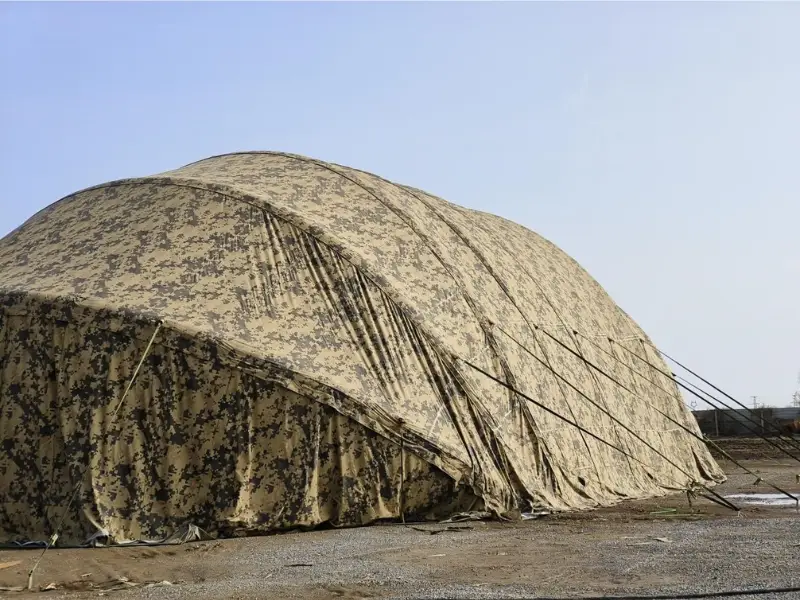
Disaster relief tents appear in three structural families. Frame tents use rigid metal tubes and need no center poles, which keeps floors clear for beds and clinics. Inflatable shelters raise high-pressure tubes with a pump, trading pole count for the fastest small-crew setup. Pole and tipi styles still appear in rapid distributions where weight on a pallet matters more than floor clearance. Each family has a place, and the spec sheet, not the family name, decides the fit.
Why the frame family dominates agency stock
Frame shelters take ground clearance out of the equation. Relief teams pitch them on school yards, parking lots, and compound courtyards where you cannot stake guy lines. If you are weighing frame materials for a mixed fleet of disaster relief tents, our comparison of steel and aluminum frame tents covers the tradeoffs in detail. For aluminum frames, The Aluminum Association documents the alloy properties that make scratch-and-rust behavior predictable in humid climates.
Key Specs That Decide a Relief Purchase
Score every bid on the same six lines before you compare disaster relief tents on price. The table below is the scoring sheet.
| Spec | What to check | Why it decides outcomes |
|---|---|---|
| Setup time and crew | Minutes per unit and people per unit, as tested | First-72-hours coverage per crew |
| Floor area and height | Usable area, not shipping area; side-wall height | Beds, family privacy, clinic cots |
| Packed volume and weight | Cubic meters and kilograms per unit | Trucks and pallet positions per camp |
| Fabric and flame behavior | Coating weight, flame-retardant standard cited | Heater use, candle risk, audit files |
| Wind and snow rating | Rated gust speed with test basis named | Season of use, anchoring plan |
| Doors, vents, and windows | Cross-ventilation and covered openings | Heat, condensation, privacy |
Ask every bidder to fill this table per model. A quote without tested setup time or a named flame standard is an incomplete quote, and treating it as complete is how camps end up with tents that fail audits after delivery.
How Many Disaster Relief Tents Does a Camp Need?
Quantity planning starts from coverage, not from catalogue pack sizes. Take the displaced population, divide by the household size your unit is rated for, then add function units: clinics, registration, storage, and feeding points. Site constraints bend the number again, because aisle width, fire separation, and ground slope reduce the usable area of any real field.
Work the numbers in this order and the tender quantity defends itself in review. Population and household size give the family unit count. Function lists give the clear-span count. A site plan with aisles and separations gives the final plot, which is where a planning tool saves an afternoon of guesswork. Agencies that skip this step usually discover their shortfall during the second population wave. Some buyers also specify dual-use disaster relief tents, family sleeping by night and distribution or clinics by day, which trims the total count a camp has to field and store.
Cost Breakdown: Unit Price Is Not Landed Cost
The unit price on the quote is only the first line. Landed cost adds ocean or air freight, inland trucking to the disaster zone, duties, and the crew cost of setup. Heavy steel-frame units can look cheaper per unit and still cost more per sheltered family once freight and crew days land on the ledger. This is why disaster relief tents should always be compared on landed cost per sheltered family, never on the quote line alone.
Three lines deserve their own columns in your comparison sheet. Freight scales with packed volume, so bays and frames that nest into a standard truck change the total. Setup labor scales with design, and pumps or cranes add equipment days. Service life scales with fabric and frame quality, because a shelter that survives two seasons halves your per-season cost. European tenders also commonly expect CE-marked components where the applicable directives cover them, so record which items carry marking.
How Agencies Run a Tent Tender
- Define the mission profile: climate, season, camp duration, and the number of families or functions per site.
- Write the spec table from the section above and make it a scored attachment, not a brochure request.
- Ask for a sample pitch, filmed or live, with the crew size the supplier claims.
- Score landed cost per sheltered family across a stated season, not unit price alone.
- Contract spares: pole or beam kits, repair tape, and a documented anchoring plan per ground type.

Where the Tents Go: Field Realities
Field conditions sort disaster relief tents quickly. Flood zones put frames on wet ground with anchoring limits, so floors, ground sheets, and ballast options matter as much as the canopy. Heat demands vents and covered windows, while mountain relief adds wind load and cold cracking to the checklist. In displacement settings, the IFRC treats shelter as one of the primary determinants of survival in the first phase of a disaster, which is why setup speed and ventilation outrank appearance in every serious tender.
Plan the camp, not just the unit. Aisle widths for stretcher access, spacing between units for fire separation, and shaded common areas between tent rows all change which model fits. A camp planning tool can turn a population figure into tent counts and site areas before you lock the tender quantity.
Procurement Pitfalls
These failure points show up in relief programs every season, and every one of them is cheaper to fix before signature than after delivery.
- Buying by canvas weight alone. Heavy fabric does not fix a weak frame, and flame claims without a cited standard do not survive an audit.
- Skipping the sample pitch. The crew size on paper is a marketing number until you watch the tent go up.
- Ignoring ventilation. Sealed units trap heat and condensation, and families improvise openings that void warranties.
- Missing spares in the contract. The first broken joint should be a swap, not a requisition cycle.
- No anchoring plan per ground type. Sand, asphalt, and loam need different anchors, and a frame swap changes the loads.
- Forgetting handover. Families receive the unit, so printed setup and care cards in local languages extend service life at trivial cost.
FAQ
How long do disaster relief tents last in continuous use?
A quality unit with a coated fabric and a sound frame typically serves one to three seasons of continuous field use. UV exposure, wind cycles, and handling set the pace. Frame quality matters most over time, which is why the frame alloy or steel coating belongs in the tender spec.
What size disaster relief tent fits a family?
Family units in relief programs commonly land in the 16 to 20 square meter class, which covers sleeping space for a household of four to five with a small buffer for belongings. Clinics and distribution points need clear-span frames instead, because cots and queues want unobstructed floors.
Are inflatable relief shelters worth it?
They earn their place when setup speed beats everything else and a pump crew is available. The trade is pump dependency and patch kits instead of spare poles. Many agencies run both: inflatables for the first push, frames for the weeks that follow.
What should a tender ask for beyond the tent itself?
Ask for anchoring kits per ground type, spare parts, setup cards, and the documentation set: flame standard, wind rating with test basis, and packing list per unit. European buyers should also log which components carry CE marking under the applicable directives. Nothing on this list is expensive, and every item shortens the gap between delivery and a camp that actually works.
Disaster relief tents reward buyers who score the sheet, not the brochure. Run the population and site figures through the Camp & Facility Space Planner, then compare candidate units against the spec table above. Our Disaster Relief Emergency Tents and Medical and Health Support Tents pages list the span, area, and framing details to fill your sheet, and the steel versus aluminum frame comparison helps you settle the frame question before you shortlist.
References
- IFRC (International Federation of Red Cross and Red Crescent Societies)
- CEN-CENELEC, European Committee for Standardization
- European Commission, CE marking
- The Aluminum Association
- American Institute of Steel Construction