2026-09-04 SUNSHINE Engineering Team
PVC vs PE Tents for Storage: Which Lasts Longer

For most commercial storage sites, PVC-coated polyester tents for storage outlast PE (polyethylene) tents by a wide margin: a quality PVC cover typically runs 8–15 years under continuous outdoor exposure, while a standard PE cover usually reaches 3–5 years before UV and abrasion force a replacement. The trade-off is weight, cost, and cold-flex behavior. If your site needs long service life, higher tear strength, and verified fire ratings, PVC is the safer pick. If you need a lighter, cheaper, short-cycle cover for a one-to-two-season job, PE can still make sense.
What Counts as a “Storage Tent”?
A storage tent is a temporary or semi-permanent fabric structure whose primary job is to protect equipment, vehicles, bulk materials, or inventory from weather. It is not a camping tent. Camping tents are designed for occasional overnight use, light loads, and small footprints; commercial tents for storage are engineered for repeated setup, larger spans, and continuous exposure to sun, wind, and precipitation.
The distinction matters because the structural loads, span lengths, and service-life expectations are different by an order of magnitude. A family camping tent might see ten nights of use per year; a commercial tents for storage deployment may sit under snow load for weeks and remain deployed through multiple storm seasons. Buyers who treat a camping-style shelter as a storage tent usually see cover failure and frame fatigue inside the first eighteen months.
The most common commercial forms are:
- Portable storage tents: 3–6 m spans, relocatable with a small crew, used for site offices, equipment covers, and short-cycle material storage.
- Heavy-duty storage tents: galvanized steel frames, 600–900 gsm covers, intended for multi-year deployment on construction sites, farms, and industrial yards.
- Container shelters: arched structures mounted onto standard ISO shipping containers, used as quick covered workspace or loading bays.
- Fabric buildings: engineered fabric structures on rigid frames, treated as semi-permanent assets in industrial sites, with spans that can reach 30 m and service lives comparable to a light steel building.

PVC vs PE: How the Two Fabrics Actually Differ
Both PVC (polyvinyl chloride) and PE (polyethylene) are used as coating materials over a woven polyester scrim, but their mechanical and chemical behavior differs sharply.
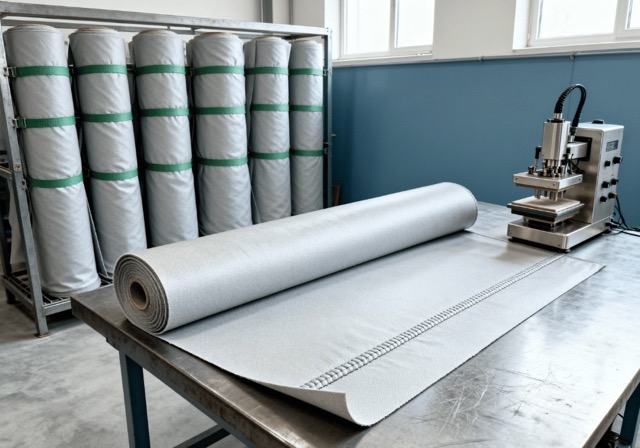
PVC is a dense, plasticized polymer film. It resists abrasion, holds up well against puncture, and tolerates a wide range of temperatures without embrittlement. PVC coatings typically run 600–900 gsm on commercial storage tent covers and accept lacquers for UV protection, anti-fungal treatment, and fire-retardant additives. The fabric welds cleanly with hot-air or RF welding, giving strong, waterproof seams that do not rely on stitching thread that can wick moisture over time.
PE is a lighter thermoplastic, usually applied as an LDPE or HDPE film laminated to a woven scrim. PE covers typically run 120–250 gsm, are cheaper, and resist many chemicals well, which is why they are common on agricultural tarps and short-cycle construction covers. The downside is faster UV degradation: untreated PE becomes brittle and chalky after extended sun exposure, especially in southern latitudes or at altitude. Seams are sewn and taped, which is fine for light-duty cycles but is the first failure point under sustained rain.
For buyers comparing the two head to head, the practical differences come down to weight per square meter, expected cover life, seam integrity under ponding, and cold-weather behavior. PVC is heavier and more expensive up front; PE is lighter and cheaper, but it stiffens in cold, ages faster in sun, and depends on seam tape with a shorter reliable service life. Selecting between PVC and PE tents for storage is usually the first major specification decision in any storage tent procurement.

Which Fabric Lasts Longer?
For a typical commercial storage site with continuous outdoor exposure, a PVC-coated cover typically reaches 8–15 years before the coating shows significant degradation. A comparable PE cover usually needs replacement at 3–5 years under the same conditions. Variables that shift those numbers:
- Climate and UV load: tropical and high-altitude sites compress PE life closer to 2–3 years because UV intensity and thermal cycling accelerate chalking and embrittlement.
- Mechanical stress: frame flex, wind flap, and snow load shorten both fabrics, but PE fails faster because its film is thinner and tears propagate more easily.
- Maintenance: periodic cleaning, re-tensioning, and prompt repair of small tears extend both. With PE, deferred repairs usually turn into full cover replacement.
- Fire-rating requirements: when a site must meet NFPA or local fire codes for flame spread, PVC is easier to specify because most reputable PVC mills offer NFPA 701 or CPAI-84 certified stock as standard. PE covers often fail common flame-spread tests without specialty treatments.
- Chemical exposure: PE handles many acids and alkalis better than PVC, which is why PE covers are common in chemical storage.
The headline ratio is roughly 3:1 to 4:1 in favor of PVC on cover service life. That ratio drives the total-cost-of-ownership calculation even though PVC costs more up front, and it is why most serious operators standardize on PVC for tents for storage rather than chasing the lower PE price.
What Specs Should You Compare?
When two storage tent quotes look similar on size and frame, the differences usually sit in these five specs:
- Fabric weight (gsm): PVC 600–900 gsm is standard for commercial storage; PE under 200 gsm is light-duty. Heavier PVC bands (750–900 gsm) are what multi-year deployments are made from.
- Tensile and tear strength: usually specified in warp/weft directions, often to ISO test methods. Ask for the test report, not a brochure figure.
- Water column / hydrostatic head: a proxy for waterproofing integrity under ponding. PVC covers with welded seams hold hydrostatic head well; PE covers with taped seams decline as the tape ages.
- Temperature range: PVC typically rated -30 °C to +70 °C; PE gets brittle well below freezing. For cold-storage sites, this alone can decide the fabric.
- Fire-retardant certification: NFPA 701, CPAI-84, or DIN 4102 are common reference standards. Certification has to cover the actual cover material.
Beyond these five, ask about UV warranty (most reputable PVC mills offer 5–10 year pro-rata warranties; PE rarely has one) and the welded-seam test method rather than a generic “heat-sealed” claim.
What Types of Storage Tents Are Available?
Buyers usually choose among four structural forms, each with a different fabric sweet spot.
Portable storage tents (3–6 m spans) are best on PVC 600 gsm when the site is permanent; PE 180–220 gsm is acceptable when the tent relocates often and total service life under 2 years is acceptable.
Heavy-duty storage tents (6–12 m spans) almost always use PVC 650–900 gsm. PE is rare at this scale because larger spans put more cyclic stress on the film. For a logistics support tent at this scale, PVC is the standard specification.
Container shelters typically use PVC 610–750 gsm covers mounted on arched steel frames between two ISO containers. PVC dominates because spans are large and covers see heavy wind on the curved surface, often sitting on the same site for 5+ years.
Fabric buildings are engineered structures, often 10–30 m spans, with PVC 900 gsm covers and rigid steel framing. PVC is the default fabric because no PE laminate of practical weight handles the cyclic loads. Fabric buildings are usually permitted, insured, and depreciated like light steel buildings.
How Do You Match a Storage Tent to Your Site?
Five questions usually decide the right answer:
- How long will the tent stay up? Under 2 years, PE can be acceptable. Over 5 years, PVC is the realistic choice.
- What weather does the site see? High UV, snow load, or sustained wind push the answer toward PVC. Coastal sites with salt spray also favor PVC.
- Does local code require fire-rated fabric? If yes, PVC with documented fire-retardant certification is much easier to specify and approve.
- How often will the tent be relocated? Frequent moves favor lighter PE covers, but the tradeoff is shorter cover life and lower wind tolerance.
- What is the total cost over the service life? A PE cover replaced three or four times usually costs more than a single PVC cover installed once, and labor for cover swaps is significant at large spans.
Lead times on PVC covers run 4–8 weeks for stock sizes and 8–14 weeks for custom spans; PE stock covers often ship faster but in narrower size ranges. For a working procurement timeline, a surge capacity tent system backed by a stocked PVC cover pipeline is usually the safer bet than waiting on a custom PE order.
For very large equipment storage, particularly aircraft, marine, or heavy vehicle fleets where the storage tent replaces a permanent hangar, an inflatable hangar tent on a PVC cover is the configuration that has the longest track record in the field.
Put side by side, PVC wins on service life, seam integrity, cold-weather flexibility, and ease of fire-rating compliance. PE wins on upfront cost, packed weight, and short-cycle deployments. The mistake most buyers make is selecting fabric on the upfront invoice rather than on total cost over the intended service life. Well-specified tents built for storage pay for themselves many times over once you stop counting cover replacements.
FAQ
What is the best tent for long stays?
For long-stay commercial storage, a PVC-coated heavy-duty storage tent on a galvanized steel frame is the standard choice. PVC resists UV, abrasion, and temperature cycling better than PE and is easier to specify to fire codes.
Are heavy duty storage tents waterproof?
Yes, when properly specified. PVC covers at 600+ gsm with welded seams are reliably waterproof for continuous outdoor deployment. PE covers are waterproof initially but lose hydrostatic integrity faster as the film ages.
How long do portable storage tents last?
Portable storage tent service life is dominated by cover life. PVC portable tents typically run 7–12 years before cover replacement; PE portable tents usually need cover replacement at 3–5 years, even when the frame is still serviceable.
Can tents be stored outside?
Yes, this is the core use case for tents for storage. Both PVC and PE covers are designed for continuous outdoor exposure, though PVC tolerates it longer. Always verify that the frame is rated for the wind and snow load of your site.
What items should I never store in my shed or storage tent?
Hazardous chemicals, pressurized gas cylinders, open flames, and live electrical loads are not appropriate for fabric structures. For sensitive inventory, verify that the storage tent meets temperature, ventilation, and fire codes for the contents.