2026-07-09 SUNSHINE Engineering Team
Inflatable Rescue Pontoon
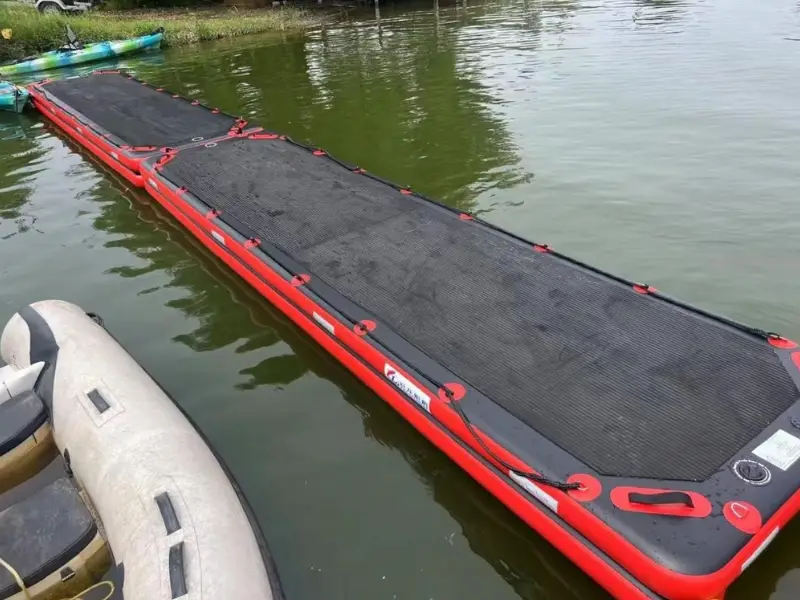
Stable inflatable pontoon for water-rescue access, temporary work platforms and casualty transfer.
Key Features
Versatile Water Support
High Buoyancy & Load Capacity
Rapid Inflation & Deployment
Durable & Lightweight
* Enhanced Visibility & Safety
Who uses an inflatable rescue pontoon
Salvage and dive contractors use pontoons as the working surface over a submerged site. Divers prepare, enter, and reboard from a stable platform instead of a rocking gunwale, and tenders keep tools and lift bags organized on the deck. The length range of 260 to 1500 cm is what lets one product line serve both a compact recovery float and a full work platform. Class context sits in our water rescue devices overview.
Flood response teams use the pontoon as a transfer platform where ramps and stairs are submerged. The high buoyancy and load capacity entry in the feature list matters when several people plus equipment move between a boat and a building entrance in one pass, and rapid inflation means the platform arrives with the initial wave of boats rather than on a later truck. Pairing logic with craft selection is covered in the flood boat walkthrough.
Marine maintenance and inspection crews are the industrial user base. A pontoon inflated alongside a hull, bridge pier, or intake structure gives technicians standing room for survey work without committing a vessel, and the stowed footprint between tasks is a fraction of a rigid barge. Export buyers into the EU meet conformity paperwork early, and the official CE marking portal plus the CEN standards pages are the primary references for that conversation.
Understanding the specification envelope
The headline figure is the length span of 260 to 1500 cm, which runs from under 3 m to 15 m in one configurable line. Width between 120 and 200 cm decides whether the platform is a walkway or a workshop, with the upper end giving standing working room for two-side access. Thickness of 15 or 20 cm in drop-stitch PVC produces the rigid deck, using the same construction logic as rescue boards, where internal threads hold the deck flat under pressure instead of letting it balloon.
The envelope has one deliberate gap: no load rating is published. High buoyancy and load capacity is stated as design intent rather than as a number, so procurement that needs a working load figure has to close it directly with the supplier. The figure for a specific build depends on the configuration, confirm with the engineering team.
Questions to settle before purchase
What is the maximum load?
No weight rating appears in the published sheet, and none should be inferred from length alone. Buoyancy scales with displaced volume, so the 1500 cm by 200 cm end of the range carries more than the compact end, but the working figure for your build depends on the configuration, confirm with the engineering team.
Can two or more pontoons be joined into a larger platform?
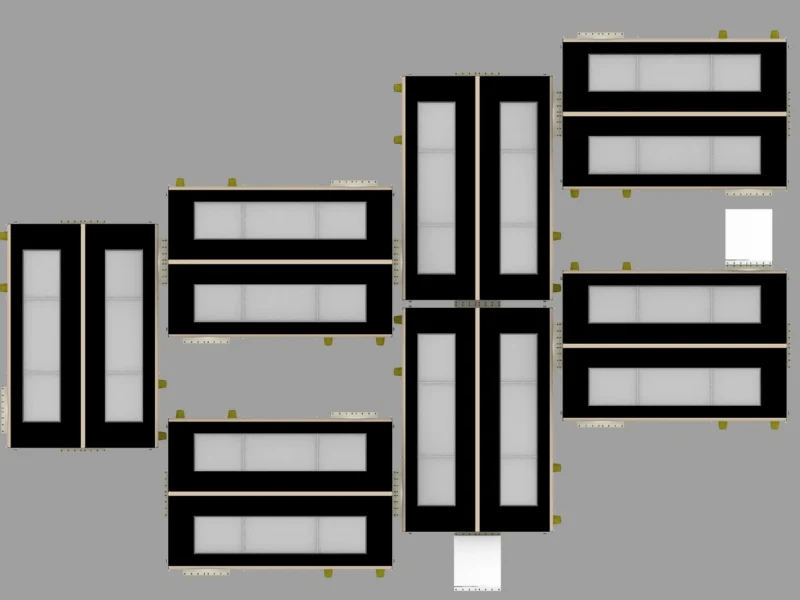
The published sheet lists custom sizes, shapes, and configuration as available, which covers multi-module layouts in principle. Connection hardware, alignment tolerances, and load behavior across the joints are engineering questions, and the answers should be settled in writing before any multi-pontoon order is placed.
How long does deployment take?
Rapid inflation and deployment is a listed feature, and the practical clock time follows platform size and the inflation equipment paired with it. No inflation time figure is published for this line, so planning values depend on the configuration, confirm with the engineering team.