2026-09-08 SUNSHINE Engineering Team
Inflatable Tent Safety Guide: Wind, Anchoring, Exits
Inflatable tent safety guide basics: wind ratings, anchoring patterns, exit spacing, and the checks crews run before every deployment.
An inflatable tent safety guide earns its keep in the twenty minutes before a storm, not in the catalog. Inflatable tent safety practice concentrates on three lines of defense: reading the wind, anchoring the structure to survive it, and keeping exits usable when the weather wins anyway. Crews that formalize those three lines turn a fabric building into dependable shelter, and crews that improvise them rediscover the same lessons at the worst hours; this guide lays out the checks in deployment order so the routine fits the calendar instead of fighting it.
Know the Risk Profile First
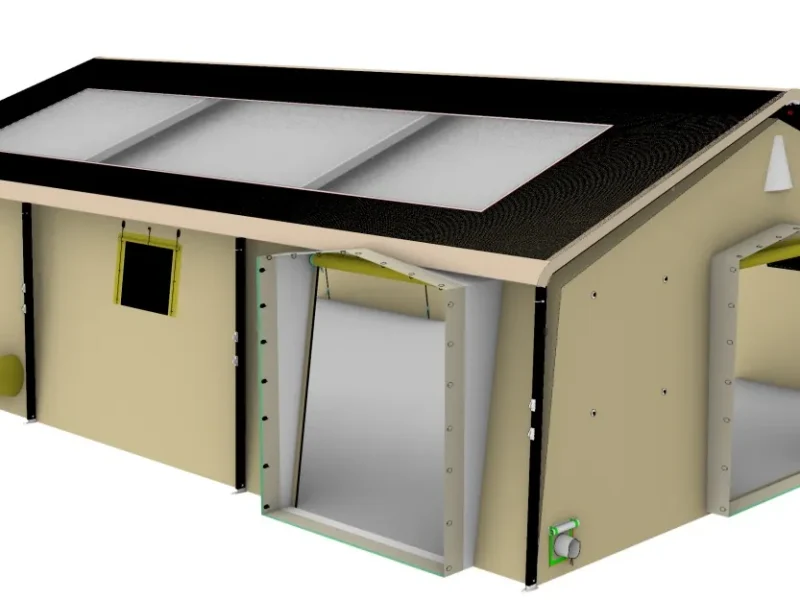
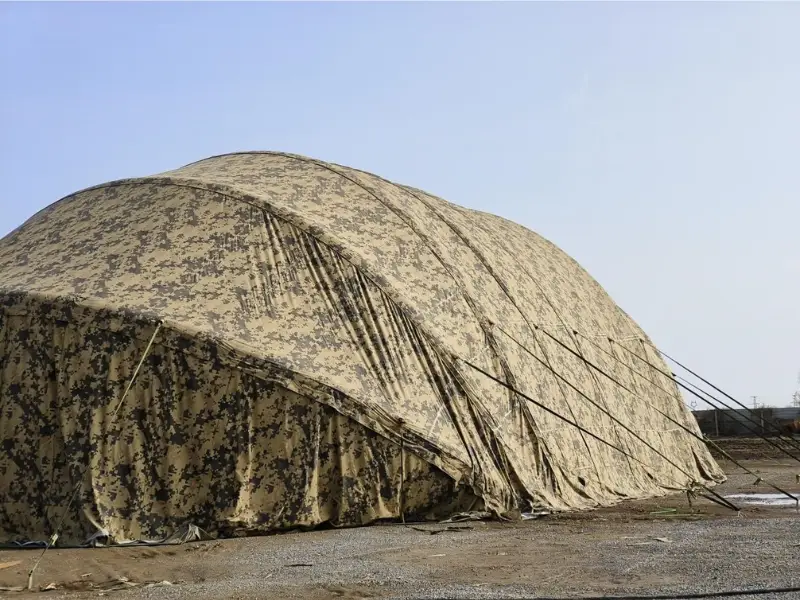
An inflatable shelter is a pressure-stabilized fabric structure, which gives it fast deployment and big clear spans, and gives weather two specific levers: wind load on the envelope and point loads at the anchors. The tent engineering overview covers the structural families, and the distinction matters because the safety routine for a pressure structure differs from a pole tent’s: chamber integrity and anchor geometry carry the safety case together.
Occupancy changes the risk math more than weather does.The pressure regime joins the risk profile as a standing item. Chamber gauges, blower condition, and the spare-parts kit belong on the same readiness card as the forecast, because a pressure structure that cannot hold its regime is a fabric pile regardless of the weather; five minutes with a gauge prevents the discovery that no forecast could.
A storage shelter that sheds a panel is a loss; a occupied command post that does the same is a casualty event, so the exit plan and the wind plan deserve equal paperwork, and the occupancy decision belongs to a named person on every deployment.
Read the Wind Before It Arrives
Wind decisions need numbers, and the Beaufort scale gives crews a shared language for them: force ratings tie observed conditions to wind speed bands, so a forecast and a flag outside the tent say the same thing. Every shelter model carries a design wind rating from its manufacturer, and the field rule is simpler than the paperwork: when the forecast band approaches the rating, the shelter goes to its storm configuration or empties.
Site reading supplements the forecast.Instrument the site when the deployment outlasts the forecast confidence. A handheld anemometer at the shelter corner turns felt gusts into a number the whole crew shares, and a logged series through the first night tells you more about local acceleration than any regional map; programs that deploy through seasons end up with their own micro-climate notes per site, which is exactly the institutional memory that keeps old anchor patterns honest.
Gaps between buildings, valley funnels, and open shorelines accelerate wind locally, and a shelter that sits calmly at the camp entrance can face a different regime thirty meters away; our inflatable tent wind resistance field guide covers the design side of that same coin, including how tube geometry and fabric selection set the ceiling your routine protects.
Watch the direction shift, not just the speed. Rotating gusts probe anchors from unloaded quarters, and the quarter that was sheltered at setup often becomes the windward face by midnight, which is why anchor patterns are laid out full-perimeter from the start rather than strengthened after the first scare.
Anchor as a System, Not a Checklist Row
Anchoring works as a geometry problem: the envelope, the straps, the stakes or ballast, and the ground form one load path, and the weakest element sets the system rating. Hardpan calls for heavy stakes driven at the specified angle, saturated flood soil calls for ballast that gains weight with water, and paved deployments call for engineered ballast blocks rather than whatever pallets arrived on the truck; the ground decision is a decision, not a default.
Strap tension distributes the story. Slack straps shock-load stakes in gusts, and over-tensioned straps work the fabric sleeves all night; the manufacturer’s tension pattern exists to split the difference, and a quarterly inspection of straps and hardware catches the wear that silently moves the system off spec. Log anchor counts per deployment, because a pattern that starts complete ends the season short two stakes unless someone counts.
Ballast has a center-of-gravity rule. Frost adds a seasonal note to the same rule: frozen ground rejects stakes that seated easily in October, and ballast that sat on soil can end up bonded to it, so winter deployments re-verify every anchor point rather than trusting the pattern the ground accepted in autumn. Blocks that sit high on frames tip before they slide, and stacked pallets shift as they settle; keep ballast low, tethered to the specified points, and inspected after every move, which converts the heaviest part of the routine into the most reliable one.
Keep the Exit Plan Alive Under Load
Exits are a safety system with moving parts: The exit plan also belongs in the shift briefing, named and walked, because the person who needs it at three in the morning may be the visitor who arrived after dark. doors, zippers, flap weights, lighting, and a path that stays clear of guy lines and equipment. At deployment, walk every exit from the inside in the dark, because a flap that opens easily by daylight can seal under wind-driven rain, and an exit that opens onto a trip hazard trades one emergency for another.
Spacing follows occupancy. Large shelters need separated exits so a single blocked door never quarters the occupants, and the exit paths should diverge away from the envelope, giving evacuating people distance from the structure in the failure mode they are escaping. Post the plan where a visitor can find it, brief it once per shift change, and rehearse it when the weather forecast earns a storm configuration.
The Pre-Deployment Check, In Order
Run the check in a fixed sequence that follows the risk lines: Laminate the card and tie it to the pump case, because equipment that travels with its checklist gets checked, and checklists that live in an office drawer get remembered. Programs that adopt the habit report the same first finding: two or three anchor points that routine use had quietly retired without anyone logging the loss, which is the cheapest safety upgrade any deployment will ever buy.
chamber pressures against the rated range, then the full anchor pattern with counts, then strap tension at each point, then exits walked and briefed, then the occupancy decision signed. A printed card beats memory, because the routine runs tired, cold, and in wind, exactly the conditions that edit improvisation.
After the deployment, the same card collects the findings that become maintenance: stretched straps, corroded hardware, chambers that lost pressure overnight, and anchor points that churned the ground. The safety routine and the service routine share one log, and the field shelter systems line is specified and customized around exactly these deployment cycles, from disaster relief through firefighting and medical use, with the wider applications catalog describing the programs these checks support.
FAQ
How much wind can an inflatable tent take?
Each model carries a manufacturer wind rating. Compare the forecast band, using the Beaufort scale as the shared language, against that rating, and move to storm configuration or evacuate as the band approaches it.
What anchoring works on pavement?
Engineered ballast blocks at the specified tether points. Stakes need soil, so paved deployments plan ballast from the start rather than substituting site pallets.
How many exits does a shelter need?
Occupancy drives the count, with separated exits for large shelters so one blocked door never traps a quarter of the occupants, and paths that diverge away from the envelope.
When do we drop to storm configuration?
When the forecast band approaches the rating, overnight for any storm watch, and any time observed gusts start working slack out of the straps. The configuration change is cheaper than the recovery.