2026-07-18 SUNSHINE Engineering Team
Inflatable Tent Wind Resistance: A Field Guide
Inflatable tent wind resistance depends on verified limits, anchoring, site exposure, monitoring, and a clear shutdown plan—not the air beams alone.
An inflatable frame can recover from a brief deflection and still be part of an unsafe installation. It can also look firm on a calm morning and become vulnerable when the ground softens, a door faces the wind, or an anchor begins to move. That is why inflatable tent wind resistance cannot be judged by pressing an air beam or reading one headline wind figure.
Core judgment: wind performance belongs to the complete, installed configuration. The frame, fabric, valves, guys, anchors, ground, orientation, inspection routine, weather data, and evacuation decision all affect the outcome.
What Inflatable Tent Wind Resistance Really Means
A useful wind claim must answer more than “How strong is the beam?” It should identify the exact shelter size and configuration, whether doors and vents are open or closed, the anchoring system, the test or engineering basis, the wind measurement method, and the operating action at the stated threshold. Without those conditions, two numbers that appear comparable may describe different situations.
Wind creates pressure and suction across the whole envelope. Loads then travel through seams, sleeves, air beams, base connections, guy lines, and anchors into the ground or ballast. A strong beam cannot compensate for a loose guy, an unsuitable stake, weak soil, or an unapproved attachment point. Likewise, an excellent anchor does not validate an altered shelter layout.
The starting point for procurement is therefore the documented configuration available through an inflatable field shelter system discussion, not a generic assumption about all air tents.
| Evidence question | Why it matters |
|---|---|
| Which exact model and module arrangement was assessed? | Length, height, connections, and openings change the load path. |
| Which anchors, guys, and ground conditions were assumed? | The foundation of a temporary structure is part of its resistance. |
| Is the limit an operating, gust, erection, or evacuation value? | Those values trigger different decisions and must not be exchanged. |
| How and where is wind measured? | A forecast or sheltered sensor may not represent wind at the tent. |
Read the Published Wind Figures Before the Wind Arrives
SUNSHINE’s disaster relief emergency tent platform publishes wind resistance at Beaufort 8 or above, roughly 17 to 21 m/s, alongside a snow load of at least 20 kg/m2, a working pressure of 18-22 kPa, and a re-inflation interval of at least 7 days. Each figure answers one question and leaves others open. The Beaufort value describes what the platform is built to withstand in its specified configuration; it does not state the gust condition that triggers evacuation, and that trigger has to come from the system manual and the site wind plan.
Pressure figures belong in the same reading. A 7-day re-inflation interval sets the inspection rhythm for a continuous occupation, and the 18-22 kPa band defines the gauge readings a crew accepts before, during, and after a storm. Where a deployment region imposes its own structural rules, for example the Gulf Building Code published by GSO, those rules sit on top of the manufacturer figures, not instead of them.
Anchorage and Ground Are Part of the Structure
Before erection, inspect the footprint and the area around every proposed anchor. Hard standing, compacted fill, sand, wet soil, frozen ground, and buried services require different decisions. Never replace specified stakes with convenient weights or tie a shelter to a vehicle unless the exact alternative has been approved for that configuration.
The UK Health and Safety Executive advises planners to assess ground load-bearing capacity, the conditions at structural anchoring points, flood behavior, prevailing wind, and whether topography can reduce wind loading. Its venue and site design guidance also highlights underground-service hazards when stakes are used.
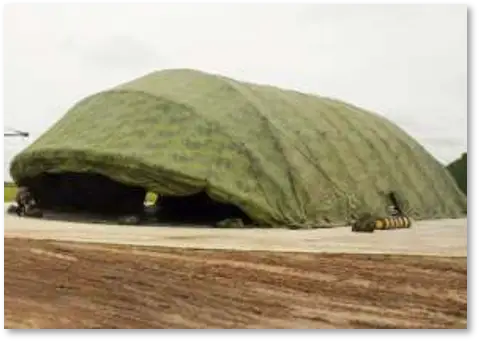
An anchor inspection is not a one-time sign-off. Rain can reduce holding capacity, vehicles can disturb guys, occupants can move ballast, and repeated gusts can loosen connections. The inspection plan should name a responsible person, define check intervals, and increase checks as conditions deteriorate.
Site Exposure Can Change the Real Load
Wind around buildings, containers, walls, ridges, and gaps can accelerate or become turbulent. A location that feels protected at ground level may still expose the roof to stronger flow. Doors facing the wind can also change internal pressure when opened. Site layout must therefore be reviewed as an operating system, including adjacent tents, vehicles, escape routes, and loose equipment.
The Met Office guidance for camping in wind and rain warns that pitching in these conditions may be dangerous and notes that a tent has no aerodynamic qualities until fully pitched. For professional deployments, this makes the erection phase a separate risk condition. Teams need a weather window, a stop-work decision, component control, and enough trained people to prevent a partly erected envelope from becoming a sail.
Use this pre-deployment sequence:
- Review forecast wind, gusts, storm timing, and likely direction.
- Walk the site for exposure, drainage, falling-object hazards, and underground services.
- Confirm the approved anchor method against the actual surface.
- Plan erection order so the structure is progressively restrained.
- Keep exits, guy lines, vehicles, and response routes from conflicting.
Field Signs That the Installation Has Changed
Wind incidents often begin as small drifts: a gauge reading outside the 18-22 kPa band, a guy line that slackened after rain softened the ground, an anchor that has migrated since installation, fabric chafe where a sleeve rubs a fitting. Treat every observation as a load-path question. Ask which element moved, which element now carries more load, and whether the assembly still matches the assessed configuration.
Engineered additions deserve their own paper trail. Where an anchoring scheme introduces structural steelwork, the AISC 360 specification is a common design reference in the United States, and teams operating under formal rescue doctrine can base their readiness documentation on NFPA 1670, which organizes operations and training for technical search and rescue incidents. Either way, the site file should name the design basis, not just the hardware.
If gauge readings and anchor checks keep failing in the same place, the question moves from maintenance to selection. SUNSHINE’s comparison of aluminum frame tents and inflatable shelters sets out where each system carries wind exposure better. Recurring field evidence should drive that reassessment, not the calendar.
A Wind-Management Plan Turns Evidence Into Action
A wind limit is useful only when somebody knows how to measure conditions and what to do next. The plan should define monitoring equipment and location, routine and worsening-weather intervals, communication, occupancy restrictions, closure of openings, evacuation, and safe dismantling. It should also state who has authority to stop use.
Darlington Borough Council’s temporary structures guidance calls for following manufacturer anchoring instructions, checking anchors and ropes regularly, knowing the maximum safe operating wind speed, and ceasing use and clearing the area when that speed is exceeded. These are practical controls, but the actual threshold must come from the selected shelter documentation—not from another tent, a blog, or a visual estimate.
⚠️ Do not improvise a higher limit: adding more air, extra stakes, heavier ballast, or extra ropes does not automatically create an engineered upgrade. Unauthorized changes can redirect loads into parts that were not assessed.
Ask for a Configuration-Specific Evidence Pack
Before placing an order, issue one requirement sheet to every bidder. Include the mission, occupancy, deployment duration, elevation, terrain, surface, seasonal weather, access constraints, connected modules, openings, equipment loads, and local safety requirements. Request drawings, setup instructions, anchoring schedules, pressure procedures, inspection criteria, repair actions, and wind-management limits for the offered configuration.
SUNSHINE’s high-pressure shelter whitepaper can frame the engineering conversation, while the broader applications overview helps define whether the shelter is intended for relief, firefighting, maintenance, logistics, or another mission.
Frequently asked questions
Are inflatable tents automatically better in wind than pole tents? No universal answer is valid. Compare configuration-specific evidence, anchoring, site controls, erection risk, inspection needs, and shutdown procedures for each offered system.
Should air pressure be increased when wind rises? Only if the exact operating manual instructs it. Overpressure can damage components, while low pressure can reduce shape stability. Use the specified gauge and limits.
Can forecast wind replace on-site monitoring? No. Forecasts support planning, but local terrain and structures can change conditions. Follow the approved monitoring plan for the installation.
Send the site and mission sheet through SUNSHINE’s project contact so wind resistance can be evaluated against a real configuration and operating plan rather than a context-free number.