2026-07-15 SUNSHINE Engineering Team
Inflatable Tent for Winter Camping: Safety Checklist
Can an inflatable tent work in winter? The frame technology alone cannot answer that question. A cold-weather shelter succeeds or fails through the combined behavior of its outer cover, liner, floor, openings, anchoring, air beams, heating plan, site drainage, inspection routine, and emergency actions.
Key decision: buy against a defined winter operating envelope, not a photograph of a tent in snow. Every claimed limit must match the exact configuration, accessories, anchoring method, and verified documentation offered for the project.
Define Winter Suitability Before Comparing Tents
Start with the mission. Record the lowest expected temperature, wind exposure, likely precipitation, snow management plan, occupancy, operating hours, transport constraints, setup crew, available power, and time between inspections. A recreational overnight shelter, a heated relief accommodation, and a medical workspace require different risk controls even if all three use air beams.
UNHCR’s emergency shelter standards make climate and context central to shelter selection. That is the right procurement principle: confirm the environment first, then evaluate the complete system. SUNSHINE’s inflatable field shelter systems provide a useful category starting point, but project suitability still requires configuration-specific evidence.
- Temperature range: request the exact system manual and documented material limitations.
- Wind and snow: request verified design criteria, the anchoring plan, and shutdown thresholds.
- Heating: request approved equipment, clearances, exhaust design, and the ventilation plan.
- Condensation: request liner, vent, airflow, and drying procedures.
- Field repair: request the spare beam, valve, patch, tools, and trained repair steps included with the offer.
Treat Warmth as an Envelope Problem
An air beam holds the shelter shape; it is not automatically the insulation layer. Thermal performance depends on the roof and wall build-up, floor separation, liners, openings, air leakage, moisture, and the temperature difference between inside and outside. Large doors opened frequently can dominate heat loss. A wet floor or uncontrolled condensation can make a nominally heated shelter uncomfortable and operationally difficult.
Review where cold bridges and drafts can occur: door thresholds, module joints, cable sleeves, vents, floor edges, and service penetrations. Then decide which openings must remain usable while wearing gloves. The high-pressure inflatable shelter whitepaper can support a technical discussion, while the procurement record should retain the exact drawings and manuals supplied for the selected configuration.
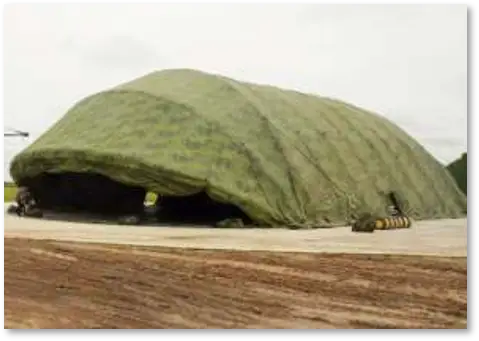
*Official SUNSHINE image of a high-pressure inflatable shelter; it illustrates form only and does not establish a winter rating.*
What Verified Cold-Weather Evidence Looks Like
A winter checklist becomes auditable when each line can be matched to a published figure for a named platform. The specification points below come from current SUNSHINE platforms, including the disaster relief emergency tent, and they show the level of evidence a bidder should produce for the exact configuration offered.
| Checklist line | Published specification example |
|---|---|
| Operating temperature | -43 C to +50 C (huge maintenance tent, inflatable hangar tent, and logistic support tent platforms) |
| Storage temperature | -55 C to +70 C (logistic support tent platform) |
| Snow load | At least 20 kg/m2 (disaster relief emergency tent platform) |
| Working pressure and re-inflation | 18-22 kPa with a re-inflation interval of at least 7 days (disaster relief emergency tent platform) |
| Rated pressure | 0.2 MPa (logistic support tent platform) |
Read each row as a boundary condition, not a comfort claim. An operating range of -43 C to +50 C says the material system is specified for severe cold and heat, not that occupants stay warm; that depends on liners, floors, and the heating plan, and SUNSHINE’s insulated tent specification guide covers how liners and heat loads are evaluated. Pressure and re-inflation figures translate into crew workload, because a platform that holds pressure for at least 7 days changes the inspection rhythm of a week-long deployment. The anchoring and exit routines that pair with snow and pressure checks are set out in SUNSHINE’s inflatable tent safety guide.
Heating Safety Is Not Optional
Fuel-burning equipment creates hazards that a warmer interior can hide. Carbon monoxide is colorless and odorless. The US Centers for Disease Control and Prevention states that generators, grills, lanterns, and portable camping stoves should not be used inside a tent or other enclosed space; its power-outage safety guidance also warns that opening doors or windows is not a substitute for safe placement and proper controls.
⚠️ Heating rule: never improvise a stove jack, exhaust route, fuel store, or clearance. Use only equipment and interfaces approved for the exact shelter system, follow local fire requirements, and include alarms, supervision, shutdown actions, and evacuation routes in the operating plan.
UNHCR’s safe-settlement guidance calls for adequate ventilation where stoves are used and for robust shelter elements where strong winds and snow loads occur. Ventilation therefore cannot be closed merely to conserve heat; it must be engineered with the heating system.
Plan for Wind, Snow, Water, and Pressure Checks
Winter procedures should be written before deployment:
- Select a site outside drainage channels, avalanche paths, drifting zones, and vehicle conflict areas.
- Verify the ground accepts the specified anchors and that frozen or thawing soil is addressed.
- Establish who monitors weather, beam pressure, anchors, roof shape, vents, and exits.
- Remove snow only by the approved method; do not strike or load the fabric with improvised tools.
- Keep valves, repair materials, exits, and fire equipment accessible after snowfall.
- Record the conditions that require reinforcement, occupant relocation, deflation, or evacuation.
Pressure readings must follow the supplied manual because air temperature influences enclosed gas pressure, while valves, beam construction, and operating ranges vary by system. Never borrow a pressure value from a different brand or tent size.
Turn Standard Citations Into Checklist Lines
Cold-weather offers often arrive with standard numbers and marks attached to fabrics, coatings, valves, or heaters. Make each citation a line item: the document number, the edition, the test report, and the part of the offered configuration the citation actually covers. The CEN and CENELEC overview of European Standards explains how EN documents are developed and identified, which lets a buyer trace a cited number instead of accepting it on faith.
Marks deserve the same discipline. The European Commission CE marking guidance describes what the mark covers and the documentation that sits behind a legitimate claim. A mark placed next to a snow-load figure carries no weight unless the declaration names the product configuration being purchased.
Use a Cold-Weather Procurement Checklist
Ask bidders to identify every item required for the proposed operating envelope: shelter body, liner, floor, anchors, pump, backup pump, pressure gauge, repair kit, spare beam or valve parts, lighting, safe heating interface, ventilation components, transport bags, and documentation. Request setup and recovery procedures, training scope, inspection intervals, and storage conditions.
For emergency operations, also map the shelter to the broader emergency-relief application: accessibility, privacy, hygiene, equipment zoning, and connection to adjacent modules may matter more than recreational comfort features.
Frequently asked questions
Do air beams become unsafe simply because the weather is cold? Not as a universal rule. Suitability depends on the exact beam, material, valve, pressure range, temperature range, and manufacturer procedure. Verify the offered system documentation.
Can a wood stove be added later? Do not assume so. Heating requires an approved interface, clearances, exhaust route, ventilation, alarms, fire controls, and local compliance.
Is a four-season label enough for procurement? No. Ask for measurable, configuration-specific evidence and an operating manual tied to the actual deployment conditions.
Send the completed environment and mission sheet through SUNSHINE’s project contact so the technical conversation begins with conditions, controls, and evidence rather than a generic winter-camping label.